
Frequent Stomach Pain: 10 Possible Causes You Should Know
Stomach or abdominal pain is one of the most common digestive complaints. It may occur after eating, when the stomach is empty, in the upper abdomen, around the navel or lower in the abdomen.
Sometimes the cause is minor and temporary. However, frequent, severe or persistent abdominal pain should not simply be labelled as “gas.”
If you repeatedly experience stomach pain, consulting an experienced Gastroenterologist in Lucknow can help identify the underlying cause.
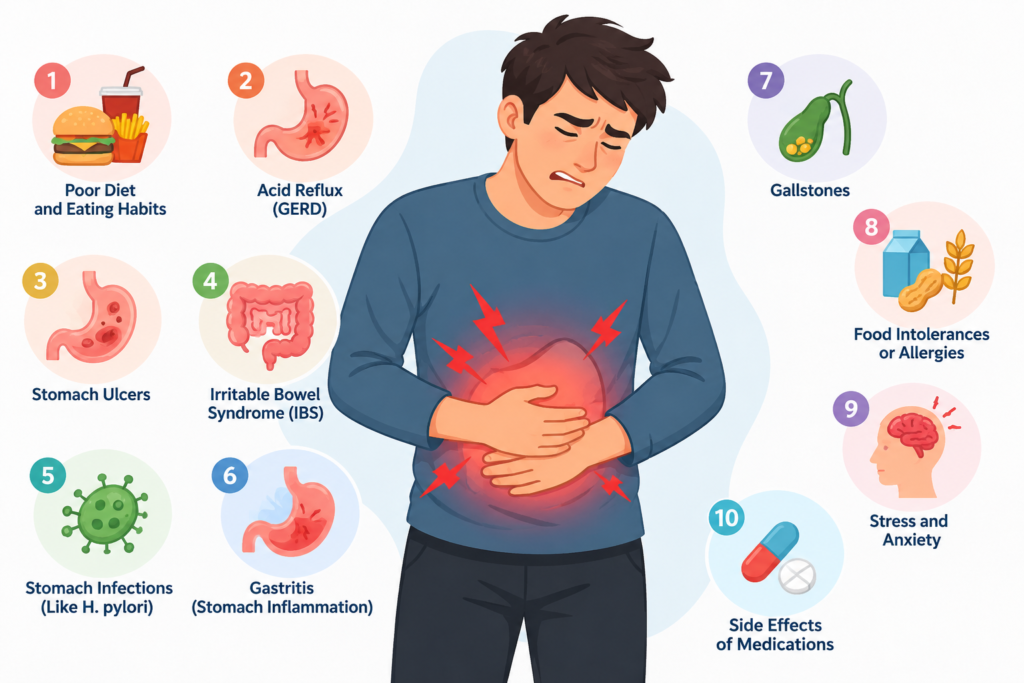
Here are 10 possible causes of recurrent abdominal pain.
1. Indigestion
Indigestion can cause discomfort or burning in the upper abdomen, early fullness during meals, or uncomfortable fullness after eating.
Occasional indigestion is common, but recurrent symptoms may require evaluation.
2. Acid Reflux and GERD
Acid reflux can cause burning behind the chest, regurgitation and upper abdominal discomfort.
When reflux repeatedly causes troublesome symptoms, it may be associated with GERD.
3. Gastritis
Gastritis refers to inflammation of the stomach lining.
Depending on the cause, it may be associated with upper abdominal pain, nausea or other digestive symptoms.
Persistent symptoms should be medically assessed because treatment depends on the underlying cause.
4. Peptic Ulcer
Ulcers can develop in the stomach or the first part of the small intestine.
Symptoms may include upper abdominal pain or discomfort, although symptoms alone cannot reliably diagnose an ulcer.
In some cases, ulcers may cause gastrointestinal bleeding and require prompt medical attention.
5. Gas and Bloating
Gas can cause abdominal pressure, cramping and discomfort.
However, frequent abdominal pain should not automatically be attributed to gas because many gastrointestinal conditions can produce similar symptoms.
6. Constipation
Constipation can lead to abdominal pain, bloating and a feeling of heaviness.
If pain improves after bowel movements or occurs alongside hard or infrequent stools, constipation may be contributing.
7. Irritable Bowel Syndrome
IBS is a gastrointestinal disorder associated with recurrent abdominal pain and changes in bowel habits.
Patients may experience constipation, diarrhoea or both.
Diagnosis should be made after appropriate clinical assessment.
8. Gallstones
Gallstones may sometimes cause pain in the upper-right or upper-middle abdomen.
Pain may occur after meals and can sometimes be severe.
Severe abdominal pain associated with fever, jaundice or persistent vomiting requires prompt medical attention.
9. Pancreatitis
Pancreatitis is inflammation of the pancreas and can cause significant upper abdominal pain, sometimes radiating toward the back.
Acute pancreatitis can be a serious medical condition and generally requires prompt medical assessment.
10. Gastrointestinal Infection
Infections affecting the digestive tract can cause abdominal cramps, diarrhoea, vomiting and sometimes fever.
Persistent symptoms or signs of dehydration require medical attention.
Location of Abdominal Pain Can Provide Clues
The location of pain may help a doctor narrow down possible causes.
For example, upper abdominal pain may arise from the stomach, gallbladder, pancreas or other structures.
Lower abdominal pain has a different range of possible causes.
However, location alone cannot establish a diagnosis.
When Should Stomach Pain Be Taken Seriously?
Seek prompt medical care for:
- Severe or rapidly worsening pain
- Vomiting blood
- Black or bloody stools
- Persistent vomiting
- High fever
- Jaundice
- Significant abdominal swelling
- Fainting or severe weakness
- Unexplained weight loss
Sudden severe abdominal pain should not be managed solely with home remedies.
How Is Recurrent Stomach Pain Diagnosed?
A gastroenterologist will typically assess the location, duration, severity and pattern of pain.
Questions may include:
- Does pain occur before or after eating?
- Is there acidity or heartburn?
- Are bowel habits normal?
- Is there vomiting?
- Has body weight changed?
- Are particular foods associated with symptoms?
Depending on the findings, blood tests, stool tests, ultrasound, endoscopy or other investigations may be considered.
Not every patient requires every test.
Don’t Assume Every Stomach Pain Is “Gas”
A common mistake is repeatedly taking medicines for gas or acidity whenever abdominal pain occurs.
Temporary improvement does not necessarily identify the underlying cause.
Persistent or recurrent pain deserves evaluation, particularly when its pattern changes or additional symptoms appear.
Consult a Gastroenterologist in Lucknow for Frequent Stomach Pain
People searching for the best Gastroenterologist in Lucknow for recurrent stomach pain should consider specialist experience in diagnosing gastrointestinal, liver and pancreatic conditions.
Dr. Puneet Mehrotra, Gastroenterologist, Hepatologist and Therapeutic Endoscopist, provides evaluation for abdominal pain and a wide range of gastrointestinal conditions in Lucknow.
Finding the cause of recurring pain is more useful than repeatedly treating the symptom without a diagnosis.
Frequently Asked Questions
Why does my stomach hurt after eating?
Possible causes include indigestion, reflux, gastritis, gallbladder problems and several other digestive conditions. Persistent post-meal pain should be evaluated.
Can gas cause severe stomach pain?
Gas can cause significant discomfort in some people, but severe or recurrent abdominal pain should not automatically be assumed to be gas.
Can constipation cause stomach pain?
Yes. Constipation can cause cramping, bloating and abdominal discomfort.
Which doctor treats recurring stomach pain?
A gastroenterologist specialises in digestive disorders and can evaluate recurrent abdominal pain.
When should I go to the hospital for stomach pain?
Sudden severe pain, vomiting blood, black or bloody stools, persistent vomiting, high fever, jaundice, fainting or rapidly worsening symptoms require prompt medical attention.