Hepatitis B vs Hepatitis C: Spread, Testing and Treatment in Lucknow
A positive hepatitis report can raise questions about your health, your family and your future. Understanding hepatitis B vs hepatitis C helps you ask the right questions instead of assuming that every liver infection needs the same treatment.
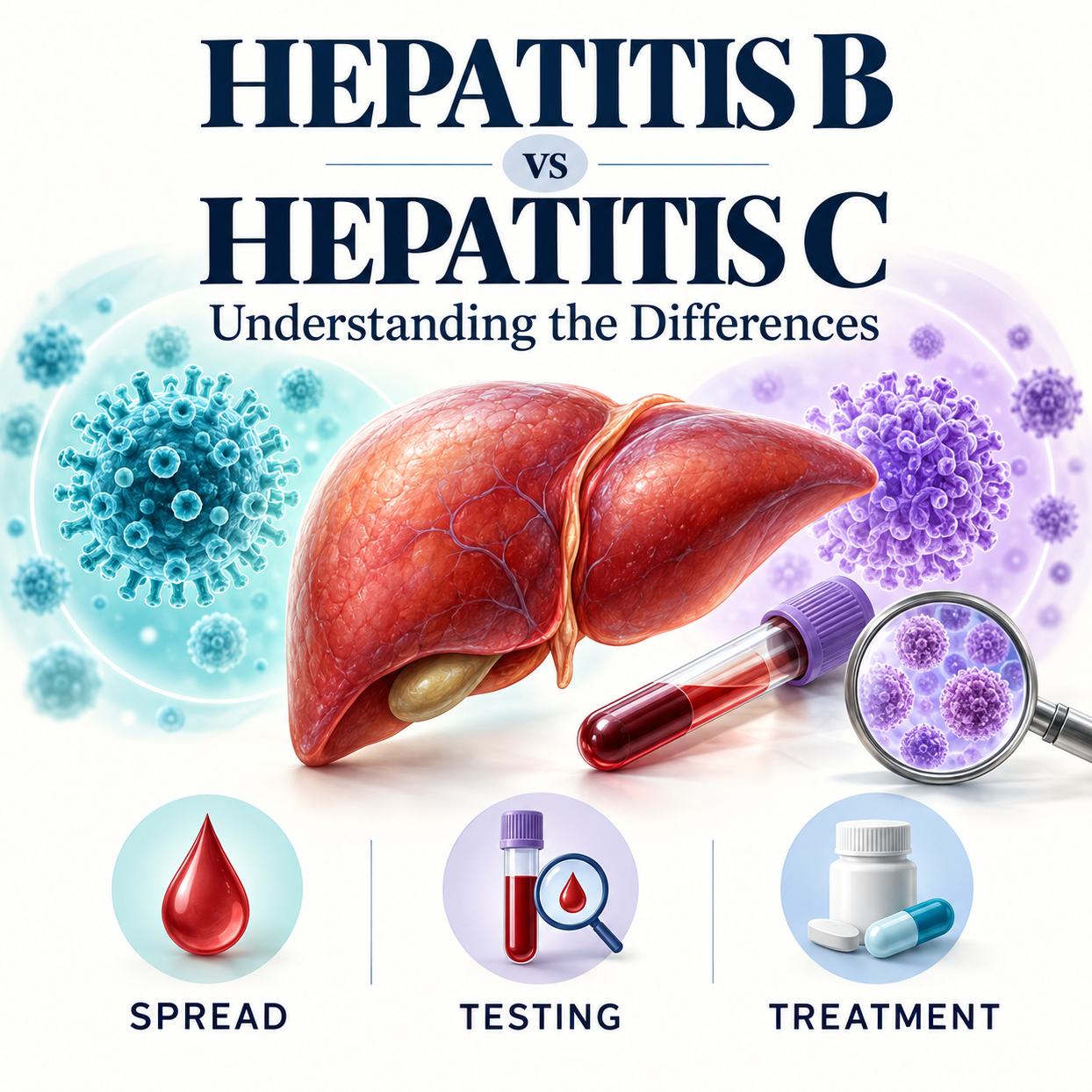
Both viruses can inflame the liver and, when infection persists, increase the risk of liver scarring and liver cancer. However, they differ in how they spread, whether vaccination is available and what treatment can achieve. This guide explains those differences and what to discuss with Dr. Puneet Mehrotra during a consultation.
What Is the Difference Between Hepatitis B and Hepatitis C?
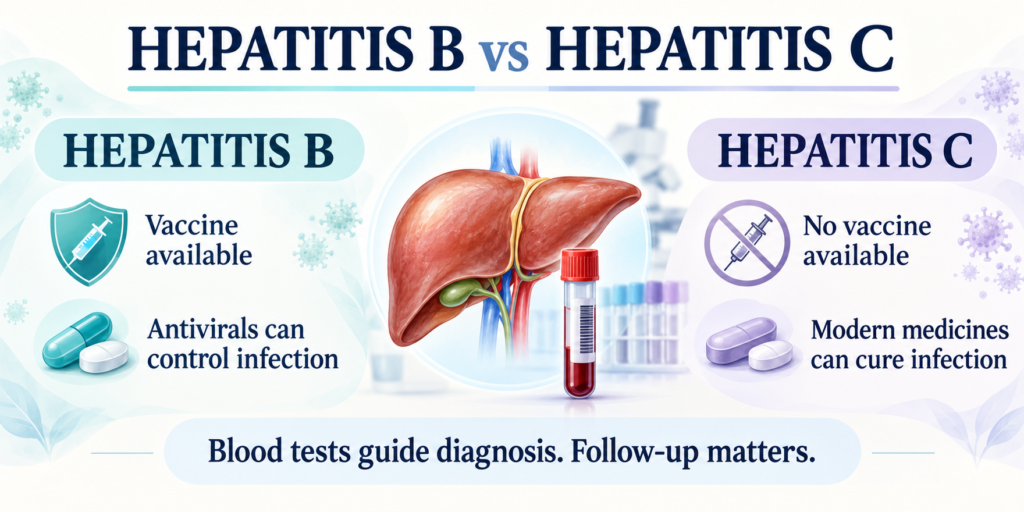
Hepatitis B is caused by the hepatitis B virus, or HBV. Infection may be short term or chronic. An effective hepatitis B vaccine is available, and chronic infection can often be controlled with antiviral medicines.
Hepatitis C is caused by the hepatitis C virus, or HCV. There is currently no approved vaccine. Modern direct-acting antivirals, known as DAAs, can cure most infections.
The distinction matters: controlling HBV and curing HCV are different treatment goals. Neither a symptom checklist nor an ultrasound can reliably tell you which virus is present.
How Do These Viruses Spread?
Hepatitis B spreads through infected blood and certain body fluids. Transmission can occur during childbirth, sexual contact, unsafe injections, or procedures using contaminated equipment.
Hepatitis C spreads mainly through infected blood, including shared needles and inadequately sterilised instruments. Transmission during childbirth or sexual activity involving blood exposure is also possible.
Both infections require sensible precautions around blood. Avoid sharing razors, toothbrushes or injection equipment, and choose facilities that follow sterilisation standards.
Hepatitis B and C do not spread through ordinary hugging, sharing meals or holding hands. A diagnosis should prompt informed care and prevention, rather than unnecessary isolation from family members.
Symptoms Can Be Easy to Miss
Some people have no noticeable symptoms, even when infection is chronic. Others develop tiredness, poor appetite, nausea, abdominal discomfort, dark urine or yellowing of the eyes and skin.
These symptoms overlap with many other conditions. Feeling well does not rule out hepatitis, and jaundice alone does not identify its cause.
Arrange medical assessment for unexplained jaundice or abnormal liver reports. Vomiting blood, black stools or new confusion needs emergency assessment because these can indicate serious complications of liver disease.
Which Blood Tests Are Needed?
Hepatitis B testing uses blood markers to distinguish current infection, past exposure and immunity. Your doctor may also request HBV DNA testing to measure viral activity and guide further assessment.
For hepatitis C, an HCV antibody test usually identifies previous exposure. A positive antibody result does not necessarily mean the virus is still present. An HCV RNA test checks for current infection.
A liver function test, or LFT, provides additional information but cannot replace virus-specific testing. Normal or improved liver enzymes should not be interpreted as proof that infection has disappeared.
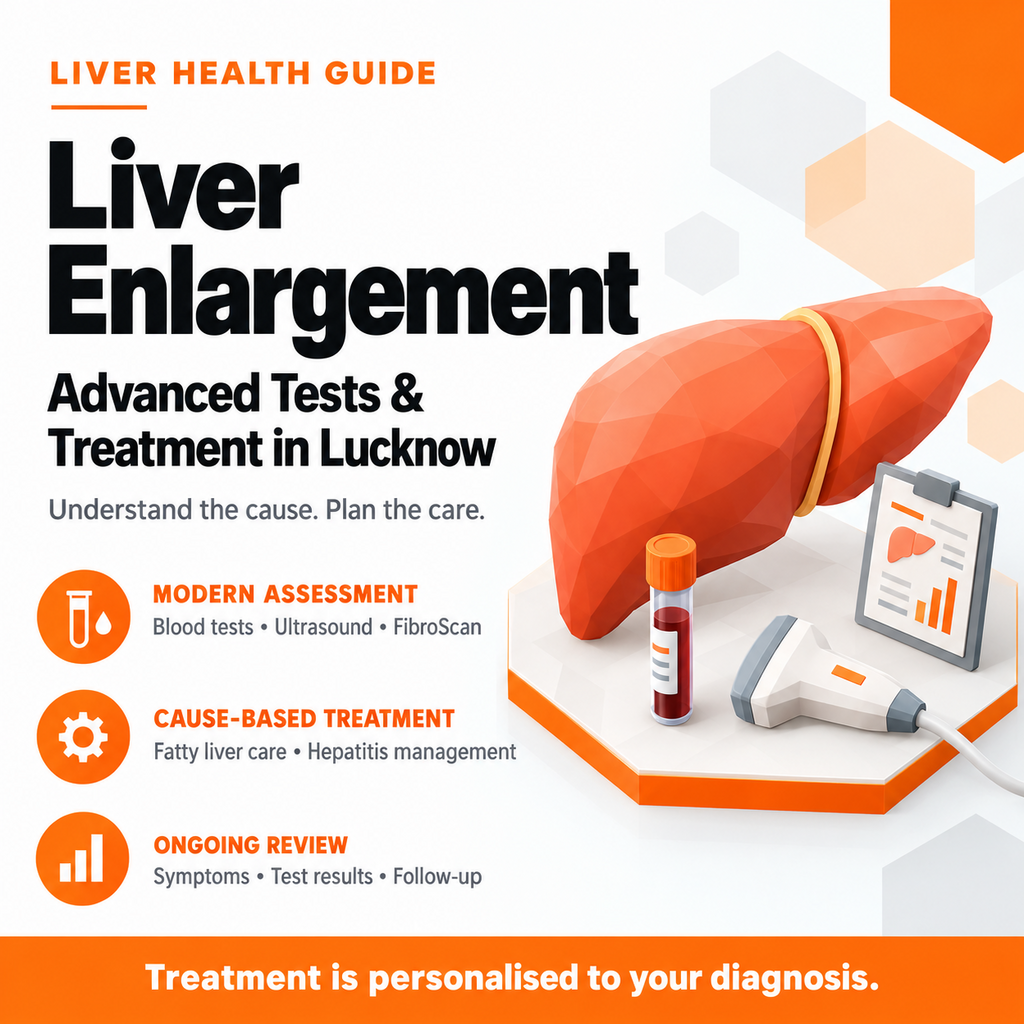
Depending on your results, ultrasound and noninvasive liver fibrosis assessment may help evaluate liver damage. Elastography measures liver stiffness; selected patients may need additional investigations. Bring previous reports so changes can be assessed over time.
Hepatitis B Treatment: Controlling the Virus
Acute hepatitis B often requires supportive care and monitoring. Chronic hepatitis B needs an individual assessment of viral activity, liver inflammation, fibrosis and other clinical factors.
Not every patient starts medication immediately. Some need regular monitoring, while others benefit from antiviral treatment. Medicines such as tenofovir or entecavir can suppress HBV and reduce the risk of further liver damage.
Treatment is frequently long term. Do not stop prescribed medication because you feel better or a report improves. Discuss missed doses, side effects and other medicines with your treating doctor.
Hepatitis C Treatment: Modern Medicines Can Cure Infection
Hepatitis C treatment has changed substantially with oral DAAs. Current treatments cure more than 95% of infections overall, although individual outcomes depend on clinical circumstances.
Many courses last eight to twelve weeks, while some patients require different durations or specialist treatment pathways. The regimen depends on factors such as cirrhosis, previous treatment and medication interactions.
Before treatment, clinicians assess liver health and check for relevant infections, including hepatitis B. Tell your doctor about prescription medicines, supplements and herbal products.
Completing tablets is only one milestone. Follow-up HCV RNA testing, commonly twelve or more weeks after treatment ends, confirms a sustained virologic response, consistent with cure. If cirrhosis is already present, liver monitoring remains important after cure.
Prevention and Follow-Up Still Matter
Ask whether you and relevant household or sexual contacts need hepatitis B testing or vaccination. Vaccination prevents HBV; it does not treat an existing infection or protect against HCV.
After hepatitis C is cured, reinfection remains possible. Continue precautions around blood exposure.
Avoid alcohol and seek advice before taking products advertised as liver cleansers. Regular follow-up helps assess treatment response, identify complications and decide whether liver cancer surveillance is needed.
Choosing Hepatitis Care in Lucknow
If you are searching for the best gastroenterologist in Lucknow for hepatitis care, look for relevant qualifications, a clear explanation of your diagnosis and a practical follow-up plan.
For a consultation with Dr. Puneet Mehrotra, bring your hepatitis reports, liver tests, scans and medication list. Ask which infection is confirmed, whether treatment is needed now and when your next review should take place.
Before leaving, ask for the next steps in writing. Keep copies of your latest results and note when each test was performed. If you receive different reports from different laboratories, show all of them to your clinician rather than deciding on treatment from an isolated result yourself.
Consult Dr. Puneet Mehrotra
Qualifications: MD (Medicine), DM, DNB (Gastroenterology), FACG
Specialty: Gastroenterologist, Hepatologist and Therapeutic Endoscopist
Clinic: Lucknow Gastroenterology & Gynaecology Centre
Address: B-127, Nirala Nagar, behind Ram Krishna Math, near IT College Crossing, Lucknow, Uttar Pradesh
Appointments: +91 9554554548 / +91 9415044452
Landline: 0522-2787150
Website: Lucknow Gastroenterology & Gynaecology Centre
Google Profile: View Dr. Puneet Mehrotra on Google
Call the clinic to confirm current consultation timings before visiting.