Ulcerative Colitis: Symptoms, Causes & Treatment
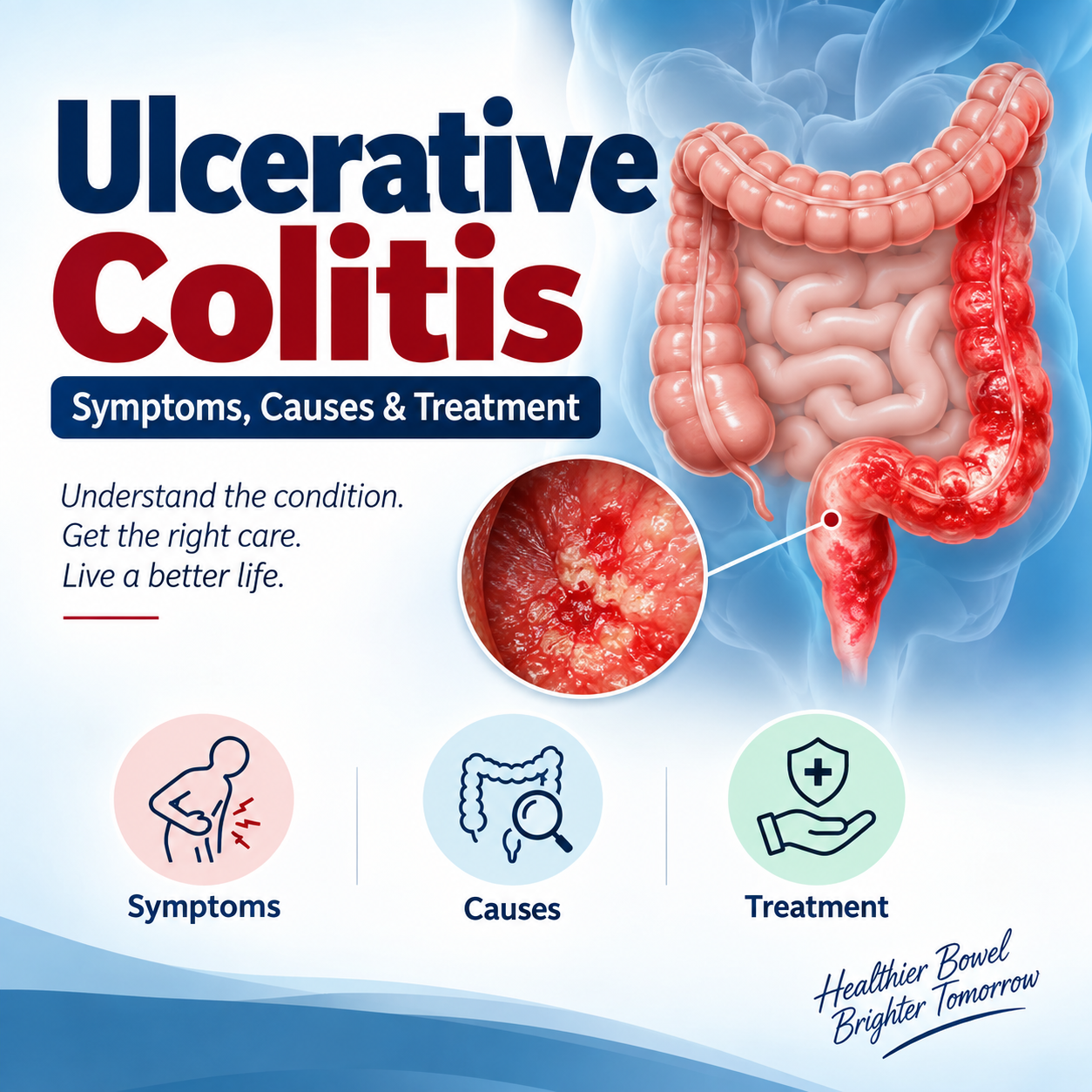
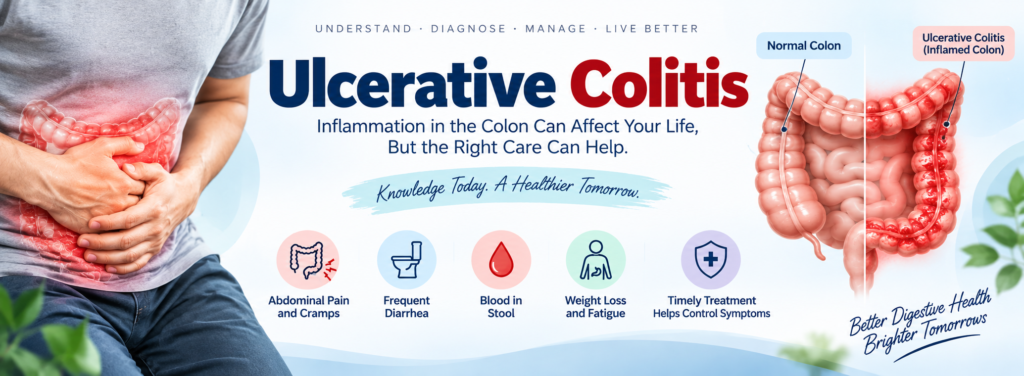
Ulcerative colitis is a long-term inflammatory bowel disease (IBD) that affects the large intestine, including the colon and rectum. It causes inflammation and ulcers in the inner lining of the colon and can lead to symptoms such as frequent diarrhea, blood in the stool, abdominal pain, and an urgent need to pass stool.
Symptoms can range from mild to severe and may come and go over time. Because ulcerative colitis can sometimes resemble other digestive problems, persistent bowel symptoms should not simply be ignored or self-treated.
If you are experiencing recurring digestive problems, consulting an experienced Gastroenterologist in Lucknow can help identify the underlying cause and determine an appropriate treatment plan.
What Is Ulcerative Colitis?
Ulcerative colitis is a form of inflammatory bowel disease in which ongoing inflammation develops in the lining of the large intestine.
The inflammation usually begins in the rectum and may extend continuously into other parts of the colon. The extent and severity of inflammation can differ considerably from one patient to another.
Ulcerative colitis is a chronic condition. Patients may experience periods when symptoms become active, known as flare-ups, followed by periods when symptoms improve or disappear, known as remission.
Common Symptoms of Ulcerative Colitis
Symptoms depend on how much of the colon is affected and how severe the inflammation is.
Common symptoms include:
- Frequent or persistent diarrhea
- Blood in the stool
- Mucus in the stool
- Abdominal pain or cramping
- Sudden urgency to pass stool
- Feeling that the bowel has not emptied completely
- Increased frequency of bowel movements
- Fatigue or weakness
- Reduced appetite
- Unintentional weight loss
- Fever in some severe cases
Some patients may also develop symptoms outside the digestive system, including problems involving the joints, skin, eyes, or other organs.
Blood in Stool Should Not Be Ignored
One of the important symptoms associated with ulcerative colitis is blood in the stool.
Blood during bowel movements can have several possible causes, including hemorrhoids, anal fissures, infections, polyps, inflammatory bowel disease, and other gastrointestinal conditions.
Therefore, repeated or unexplained rectal bleeding should be medically evaluated rather than assuming it is simply due to piles.
What Causes Ulcerative Colitis?
The exact cause of ulcerative colitis is not completely understood.
Researchers believe that several factors may contribute to its development.
1. Abnormal Immune Response
Ulcerative colitis is associated with inappropriate immune activity in the intestine. Instead of responding normally, the immune system contributes to persistent inflammation in the colon.
2. Genetics
Having close family members with ulcerative colitis or another inflammatory bowel disease may increase a person’s risk, although many patients have no family history.
3. Environmental Factors
Environmental exposures and changes in the intestinal microbiome may influence the development or activity of inflammatory bowel disease.
Importantly, everyday stress and particular foods are not considered the direct cause of ulcerative colitis, although they may worsen symptoms in some people.
Ulcerative Colitis vs IBS: Are They the Same?
No.
Ulcerative colitis and irritable bowel syndrome (IBS) are different conditions.
Ulcerative colitis involves actual inflammation and injury to the lining of the colon and is classified as inflammatory bowel disease.
IBS, on the other hand, is a disorder involving bowel function and gut-brain interaction and does not produce the same characteristic intestinal inflammation seen in ulcerative colitis.
Because symptoms such as abdominal discomfort and changes in bowel habits can overlap, proper diagnosis is important.
How Is Ulcerative Colitis Diagnosed?
Diagnosis usually involves evaluating the patient’s symptoms, medical history, physical examination, and appropriate investigations.
A gastroenterologist may recommend:
Blood Tests
Blood tests can help identify anemia, inflammation, infection, or other abnormalities.
Stool Tests
Stool examination may be performed to check for infections and markers of intestinal inflammation.
Colonoscopy
Colonoscopy allows the doctor to directly examine the inner lining of the colon and rectum.
During the procedure, small tissue samples called biopsies may be collected for laboratory examination.
Flexible Sigmoidoscopy
In selected cases, the rectum and lower part of the colon may be examined using flexible sigmoidoscopy.
Additional imaging may sometimes be required depending on the patient’s condition and symptoms.
Treatment of Ulcerative Colitis
Treatment depends on the severity and extent of disease, previous response to treatment, and the patient’s overall health.
The main goals are to control inflammation, relieve symptoms, achieve remission, and maintain remission for as long as possible.
Anti-Inflammatory Medicines
Aminosalicylates such as 5-ASA medicines are commonly used in appropriate cases to reduce inflammation in the colon.
Corticosteroids
Steroids may be used for certain moderate or severe flare-ups. They are generally intended for controlling active inflammation rather than routine long-term maintenance because of potential side effects.
Immunomodulators
Medicines that modify immune activity may be recommended for selected patients when longer-term disease control is needed.
Biologic and Targeted Therapies
For moderate-to-severe ulcerative colitis, modern biologic medicines and other targeted therapies may be considered depending on disease characteristics and previous treatment response.
Surgery
Most patients are managed medically, but surgery may become necessary when severe disease does not respond adequately to treatment or when serious complications develop.
Treatment should always be individualized under specialist supervision.
Diet and Ulcerative Colitis
There is no single diet that works for every person with ulcerative colitis.
During flare-ups, some patients may tolerate certain foods better than others. Adequate hydration and nutrition are particularly important when diarrhea is frequent.
Keeping a food diary can sometimes help identify foods that consistently worsen symptoms.
Patients should avoid unnecessarily eliminating multiple food groups without professional advice because restrictive diets can lead to nutritional deficiencies.
Can Ulcerative Colitis Be Cured?
Ulcerative colitis is generally considered a chronic disease. Medical treatment focuses on controlling inflammation and maintaining long periods of remission.
Many patients can lead active lives when the disease is properly diagnosed, monitored, and treated.
Surgical removal of the colon can eliminate colonic ulcerative colitis, but this is a major treatment decision and is reserved for appropriate clinical situations.
Possible Complications
Poorly controlled or severe ulcerative colitis may be associated with complications such as:
- Significant intestinal bleeding
- Severe dehydration
- Anemia
- Toxic megacolon
- Increased risk of blood clots
- Nutritional problems
- Increased colorectal cancer risk with long-standing extensive disease
The colorectal cancer risk depends on factors including the duration and extent of disease. Patients with long-standing ulcerative colitis may therefore require periodic surveillance colonoscopy according to their individual risk.
When Should You See a Gastroenterologist?
Consult a gastroenterologist if you experience persistent or recurring symptoms such as blood in the stool, prolonged diarrhea, unexplained abdominal pain, frequent urgency to pass stool, unexplained weight loss, or major changes in bowel habits.
Seek urgent medical attention for heavy rectal bleeding, severe abdominal pain or swelling, high fever, fainting, severe dehydration, or rapidly worsening symptoms.
Early evaluation can help distinguish ulcerative colitis from infections and other gastrointestinal conditions.
Frequently Asked Questions
Is ulcerative colitis dangerous?
The severity varies considerably between patients. Mild disease may remain well controlled, while severe or poorly controlled disease can cause significant complications. Regular medical follow-up is therefore important.
Does ulcerative colitis cause blood in stool?
Yes. Rectal bleeding and bloody diarrhea are common symptoms, although blood in the stool can have many other causes and requires proper evaluation.
Is ulcerative colitis contagious?
No. Ulcerative colitis is not an infectious disease and cannot spread from one person to another.
Can stress cause ulcerative colitis?
Stress is not considered the direct cause of ulcerative colitis, although some patients report worsening digestive symptoms during periods of stress.
Can ulcerative colitis turn into cancer?
Long-standing ulcerative colitis involving a substantial portion of the colon can increase colorectal cancer risk. The degree of risk varies, which is why appropriate surveillance may be recommended.
Which doctor treats ulcerative colitis?
A gastroenterologist specializes in diagnosing and treating inflammatory bowel diseases such as ulcerative colitis.
Book a Consultation with Dr. Puneet Mehrotra
Dr. Puneet Mehrotra
Gastroenterologist | Hepatologist | Therapeutic Endoscopist | GI & Liver Specialist
MD Medicine | DM Gastroenterology (SGPGIMS)
DNB Gastroenterology | Member – American College of Gastroenterology (ACG)
Lucknow Gastroenterology & Gynaecology Centre
Address:
B-127, Nirala Nagar, Behind Ram Krishna Math,
Near IT College Crossing, Lucknow
Consultation Timing:
9:00 AM – 4:00 PM (Daily)
For Appointments & Enquiries:
📞 9554554548
📞 9415044452
☎️ 0522-2787150
If you are experiencing persistent diarrhea, blood in stool, abdominal pain, bowel urgency or other symptoms associated with ulcerative colitis, consult a gastroenterologist for proper evaluation and appropriate treatment.