Blood in Stool: Common Causes and When You Should Worry
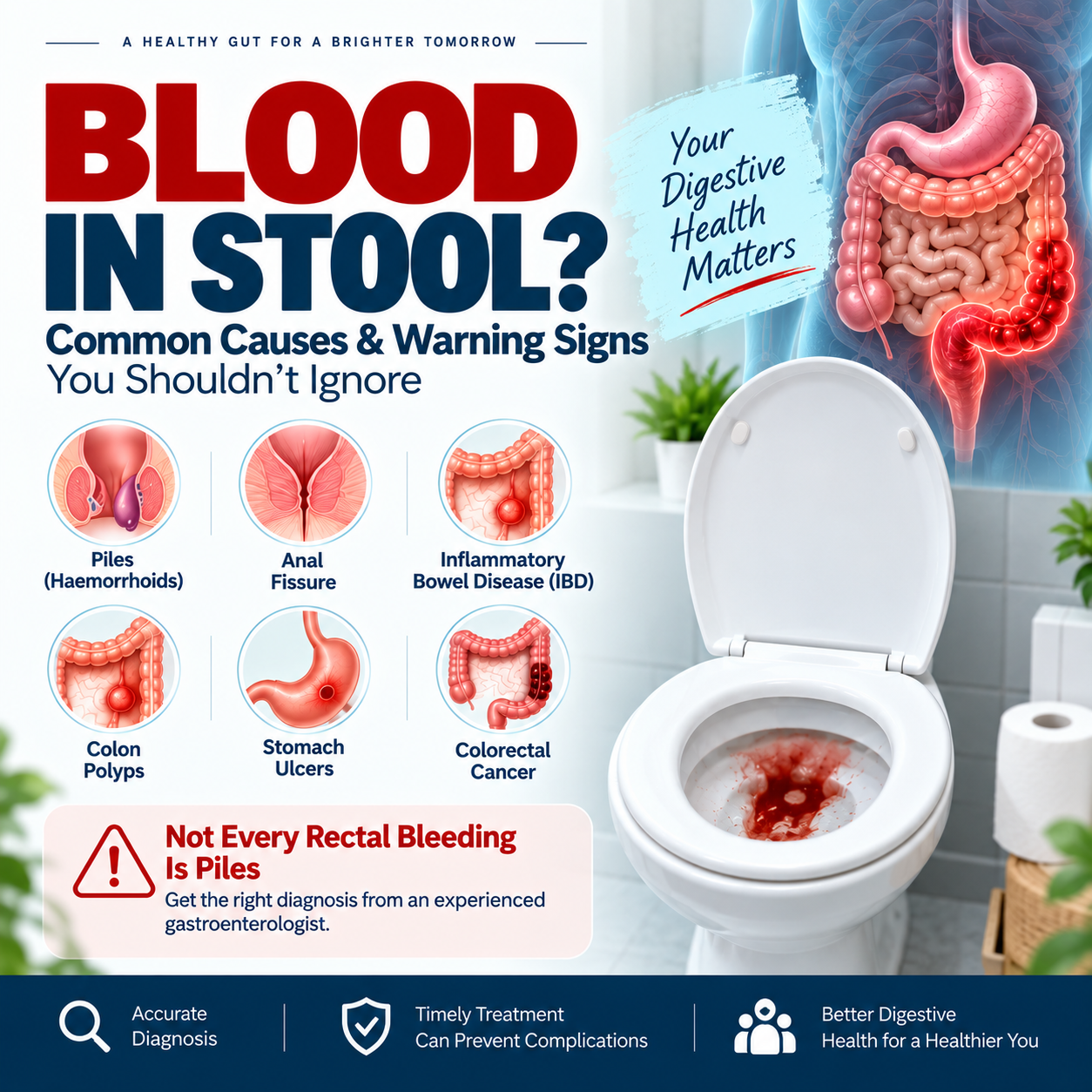
Seeing blood in your stool can be alarming. In some cases, it may be caused by relatively common conditions such as piles or an anal fissure, while in other situations it can indicate bleeding somewhere in the digestive tract that requires medical evaluation.
The colour, amount and frequency of blood, along with symptoms such as abdominal pain, changes in bowel habits, weakness or unexplained weight loss, can provide important clues about its possible cause.
If blood in stool occurs repeatedly or is accompanied by other concerning symptoms, consultation with an experienced Gastroenterologist in Lucknow can help identify the source of bleeding and determine appropriate treatment.
What Does Blood in Stool Mean?
Blood in stool, medically referred to as rectal or gastrointestinal bleeding depending on its source, means that bleeding has occurred somewhere along the digestive tract.
The gastrointestinal tract includes the:
- Oesophagus
- Stomach
- Small intestine
- Large intestine or colon
- Rectum
- Anus
The appearance of the blood may vary depending on where the bleeding originates.
Sometimes blood is clearly visible on toilet paper or in the toilet bowl. In other cases, it may be mixed with the stool or make the stool appear very dark or black.
Occasionally, small amounts of blood may not be visible to the naked eye and may only be detected through laboratory testing.
What Does the Colour of Blood in Stool Indicate?
The appearance of blood can sometimes help doctors estimate where the bleeding may be coming from.
Bright Red Blood
Fresh, bright red blood often suggests bleeding from the lower part of the digestive tract, particularly the rectum or anus.
Possible causes can include piles, anal fissures and certain conditions affecting the colon or rectum.
Dark Red or Maroon Stool
Dark red or maroon-coloured stool may indicate bleeding from a higher part of the colon or, in some situations, another part of the gastrointestinal tract.
Black, Tarry Stool
Black, sticky or tar-like stool can be a sign of digested blood, often associated with bleeding from the upper gastrointestinal tract.
This type of stool should not be ignored, particularly when accompanied by weakness, dizziness, abdominal discomfort or vomiting.
It is important to remember that stool colour alone cannot confirm the cause. Certain foods, iron supplements and medicines can also change stool colour.
Common Causes of Blood in Stool
There are several possible causes of gastrointestinal or rectal bleeding. Some are relatively minor, while others require prompt investigation.
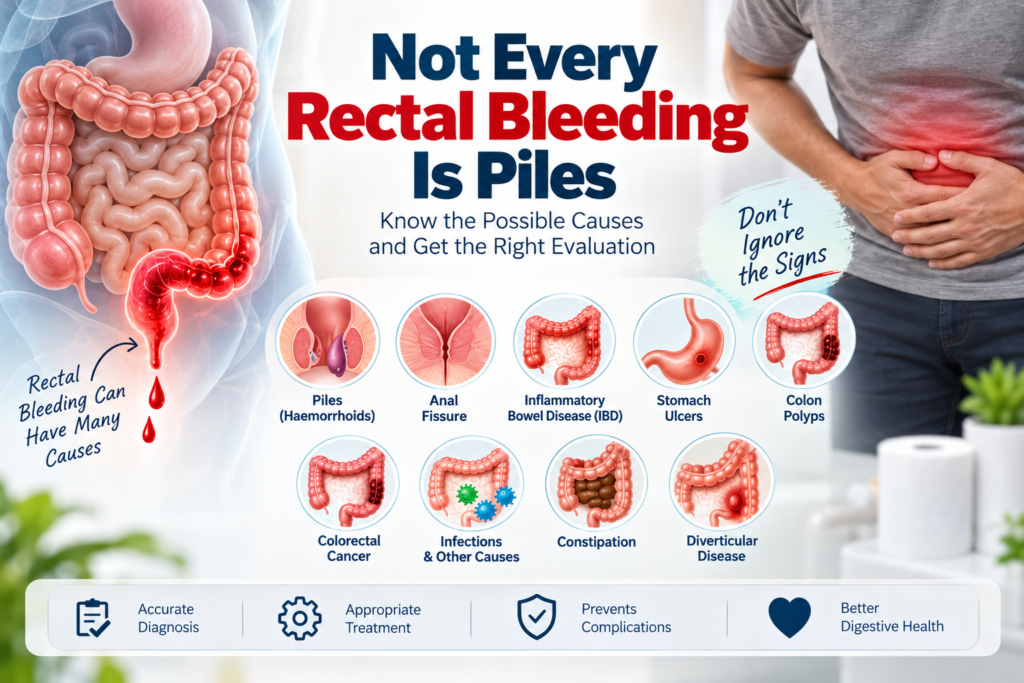
1. Piles (Haemorrhoids)
Piles are swollen blood vessels around the anus or lower rectum.
They are one of the common reasons for fresh blood during bowel movements.
Possible symptoms include:
- Bright red blood after passing stool
- Itching around the anus
- Discomfort while sitting
- Swelling or a lump around the anus
Constipation and excessive straining during bowel movements can contribute to haemorrhoids.
However, blood in stool should not automatically be assumed to be due to piles without proper evaluation.
2. Anal Fissure
An anal fissure is a small tear in the lining of the anus.
It commonly develops after passing hard or large stools and can cause:
- Sharp pain during bowel movements
- Burning sensation after passing stool
- Bright red blood on toilet paper
- Constipation
Managing constipation and keeping stools soft can be important parts of treatment, although persistent fissures may require additional medical management.
3. Constipation
Chronic constipation can lead to hard stools and excessive straining.
This may contribute to conditions such as anal fissures and haemorrhoids, which can subsequently cause rectal bleeding.
People with constipation may also experience:
- Hard or dry stools
- Fewer bowel movements
- Straining
- Feeling of incomplete evacuation
- Abdominal bloating
Persistent constipation, particularly when accompanied by bleeding, deserves medical evaluation.
4. Gastrointestinal Infections
Certain intestinal infections can cause inflammation and bleeding.
Depending on the infection, symptoms may include:
- Loose stools or diarrhoea
- Blood or mucus in stool
- Abdominal cramps
- Fever
- Nausea or vomiting
Treatment depends on the underlying cause, so self-medication with antibiotics should generally be avoided unless prescribed by a doctor.
5. Inflammatory Bowel Disease (IBD)
Inflammatory bowel disease primarily includes conditions such as ulcerative colitis and Crohn’s disease.
These are chronic inflammatory conditions affecting the gastrointestinal tract.
Possible symptoms include:
- Recurrent diarrhoea
- Blood in stool
- Abdominal pain
- Urgency to pass stool
- Fatigue
- Reduced appetite
- Unintentional weight loss
IBD requires appropriate diagnosis and long-term medical management.
6. Diverticular Disease
Diverticula are small pouches that can develop in the wall of the colon.
Bleeding can occasionally occur from these pouches and may sometimes be significant.
Depending on the condition, patients may experience bleeding with or without abdominal symptoms.
Evaluation is important to determine the source and severity of bleeding.
7. Stomach or Duodenal Ulcers
An ulcer in the stomach or upper part of the small intestine can sometimes bleed.
Because the blood travels through the digestive tract, it may cause black or tarry stools rather than bright red blood.
Other possible symptoms can include:
- Upper abdominal pain
- Burning or discomfort in the stomach
- Nausea
- Weakness
- Dizziness
Significant ulcer bleeding can require urgent medical treatment.
8. Colon Polyps
Colon polyps are growths that develop on the inner lining of the colon.
Many polyps do not cause symptoms, but some may bleed.
Certain types of polyps can develop precancerous changes over time, which is one reason doctors may recommend colonoscopy in appropriate patients.
9. Colorectal Cancer
Blood in stool can sometimes be associated with colorectal cancer, although many cases of rectal bleeding have other causes.
Warning signs that may require further investigation include:
- Persistent blood in stool
- Unexplained weight loss
- Persistent change in bowel habits
- Unexplained anaemia
- Increasing fatigue or weakness
- Persistent abdominal discomfort
Early medical evaluation is particularly important when these symptoms occur together.
When Should You Worry About Blood in Stool?
A single small episode of fresh blood may sometimes be related to a minor anorectal problem, but recurrent or unexplained bleeding should not be ignored.
You should consider consulting a gastroenterologist if:
- Blood appears repeatedly in your stool
- The amount of bleeding is increasing
- Stool becomes black or tarry
- There is a persistent change in bowel habits
- You experience persistent abdominal pain
- You have unexplained weight loss
- You feel unusually tired or weak
- Blood is accompanied by persistent diarrhoea
- You have symptoms of anaemia
- You have a personal or family history that increases the risk of gastrointestinal disease
The underlying cause cannot reliably be determined from symptoms alone.
When Is Blood in Stool an Emergency?
Seek urgent medical attention if gastrointestinal bleeding is heavy or accompanied by symptoms such as:
- Severe weakness
- Fainting
- Significant dizziness
- Rapid heartbeat
- Vomiting blood
- Large amounts of blood in stool
- Black, tarry stool with weakness or dizziness
- Severe abdominal pain
Significant gastrointestinal bleeding can lead to substantial blood loss and should be assessed promptly.
How Is the Cause of Blood in Stool Diagnosed?
The appropriate investigations depend on the patient’s age, symptoms, medical history, amount and appearance of bleeding, and other risk factors.
Medical History
The doctor may ask about:
- Colour and amount of blood
- Duration and frequency of bleeding
- Constipation or diarrhoea
- Abdominal pain
- Weight changes
- Current medications
- Previous digestive conditions
- Family medical history
Physical Examination
An examination may help identify conditions affecting the anus or rectum, such as haemorrhoids or fissures.
Blood Tests
Blood tests may be recommended to check haemoglobin levels and identify anaemia or other abnormalities.
Stool Tests
Depending on symptoms, stool examination may help identify infection, inflammation or hidden blood.
Endoscopy
Upper GI endoscopy may be considered when bleeding from the oesophagus, stomach or duodenum is suspected.
Colonoscopy
Colonoscopy allows the doctor to examine the inner lining of the colon and rectum.
It may be recommended in selected patients to investigate persistent rectal bleeding, bowel habit changes, unexplained anaemia, polyps or other suspected conditions.
How Is Blood in Stool Treated?
There is no single treatment for blood in stool because treatment depends entirely on the underlying cause.
For example:
- Constipation may require dietary, hydration and bowel-habit changes along with appropriate medication when needed.
- Haemorrhoids and anal fissures may require specific medical or procedural treatment.
- Gastrointestinal infections are treated according to their cause.
- Inflammatory bowel disease requires targeted medical management.
- Ulcers may require medicines and treatment of the underlying cause.
- Polyps may be removed during colonoscopy when clinically appropriate.
- Significant gastrointestinal bleeding may require hospital-based treatment.
The key is to identify where the bleeding is coming from and why it is occurring.
Can Blood in Stool Be Prevented?
Not every cause of gastrointestinal bleeding is preventable. However, maintaining healthy bowel habits may reduce problems associated with constipation and excessive straining.
Helpful habits can include:
- Drinking adequate fluids
- Eating sufficient dietary fibre
- Including fruits and vegetables in your diet
- Staying physically active
- Avoiding prolonged straining during bowel movements
- Not ignoring persistent digestive symptoms
- Taking medicines only as advised, particularly if they may affect the gastrointestinal tract
Regular medical evaluation may also be appropriate for people with specific gastrointestinal risk factors.
Do Not Assume Every Episode Is Piles
One of the most important points about blood in stool is that visible bleeding should not automatically be labelled as piles.
Haemorrhoids are common, but bleeding can originate from several different areas of the gastrointestinal tract.
If the bleeding is recurrent, unexplained or associated with other symptoms, proper evaluation can help establish the correct diagnosis.
Consult a Gastroenterologist in Lucknow
If you notice blood in your stool, black stools, persistent bowel changes, unexplained abdominal symptoms or recurrent digestive problems, consider seeking professional medical evaluation.
Dr. Puneet Mehrotra is a Gastroenterologist, Hepatologist, Therapeutic Endoscopist and GI & Liver Specialist in Lucknow. Evaluation may include clinical examination and, where appropriate, investigations such as blood tests, stool tests, endoscopy or colonoscopy.
Dr. Puneet Mehrotra
MD Medicine | DM Gastroenterology (SGPGIMS)
DNB – Gastroenterology
Member – American College of Gastroenterology
Gastroenterologist | Hepatologist | Therapeutic Endoscopist | GI & Liver Specialist
Lucknow Gastroenterology & Gynaecology Centre (LGGC)
B-127, Nirala Nagar, Behind Ram Krishna Math, Near IT College Crossing, Lucknow
Consultation Timing: 9:00 AM – 4:00 PM (Daily)
Contact:
9554554548
9415044452
0522-2787150
If you are searching for the best Gastroenterologist in Lucknow for persistent digestive symptoms, gastrointestinal bleeding or related concerns, timely consultation can help identify the underlying problem and guide appropriate treatment.
Frequently Asked Questions (FAQs)
Is bright red blood in stool always piles?
No. Haemorrhoids are a common cause of bright red rectal bleeding, but anal fissures and several other conditions can also cause it. Recurrent or unexplained bleeding should be evaluated.
Can constipation cause blood in stool?
Constipation can indirectly cause bleeding by producing hard stools and excessive straining, which may contribute to anal fissures or haemorrhoids.
What does black stool indicate?
Black, tarry stool can sometimes indicate bleeding from the upper gastrointestinal tract, although certain foods, iron supplements and medicines can also darken stools. Black tarry stools, especially with weakness or dizziness, warrant prompt medical attention.
Is colonoscopy necessary for blood in stool?
Not everyone with blood in stool requires a colonoscopy. The decision depends on factors such as age, symptoms, medical history, examination findings and the suspected source of bleeding.
Can blood in stool be a sign of cancer?
It can be one possible symptom of colorectal cancer, but many non-cancerous conditions also cause rectal bleeding. Persistent bleeding, unexplained weight loss, anaemia or changes in bowel habits should be medically evaluated.
Which doctor should I consult for recurring blood in stool?
A gastroenterologist can evaluate gastrointestinal and rectal bleeding and determine whether further investigations such as blood tests, stool tests, endoscopy or colonoscopy are appropriate.