Constipation: Causes, Symptoms & When to Consult a Gastroenterologist
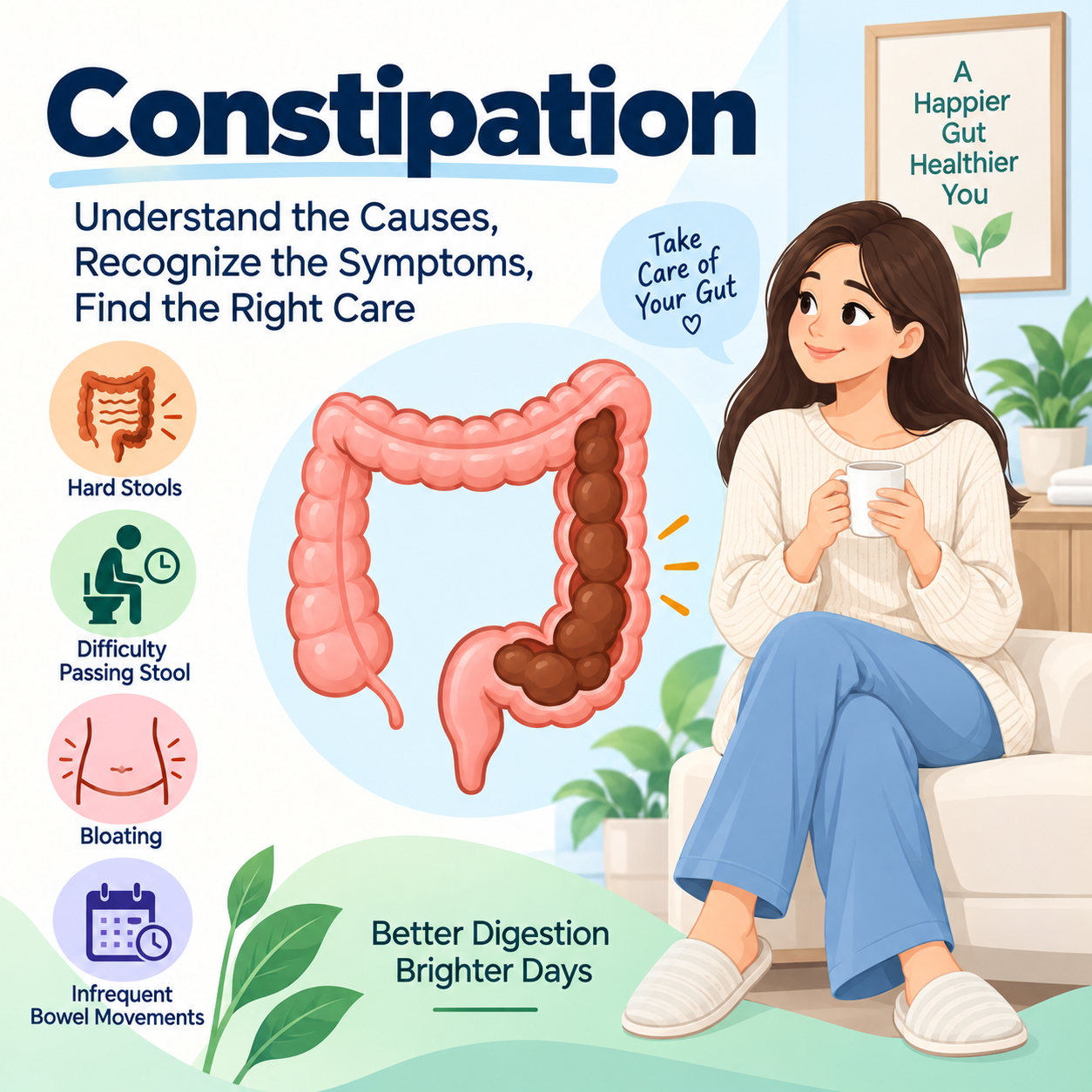
Constipation is a common digestive complaint, but it means more than simply not passing stool every day. Hard stools, excessive straining, difficulty passing stool or a feeling that the bowel has not emptied completely can all be features of constipation.
Occasional constipation can happen because of changes in diet, routine, hydration or physical activity. Persistent or recurring constipation, however, deserves proper evaluation.
If constipation is frequently affecting your daily routine, consulting an experienced Gastroenterologist in Lucknow can help identify possible causes and determine an appropriate management plan.
What Is Constipation?
Bowel habits naturally differ between people.
Constipation may involve:
- Fewer bowel movements than usual
- Hard or dry stools
- Difficulty passing stool
- Excessive straining
- Feeling of incomplete evacuation
- A sensation of blockage while passing stool
The frequency of bowel movements alone does not tell the whole story.
What Causes Constipation?
Several dietary, lifestyle, medication-related and medical factors can contribute.
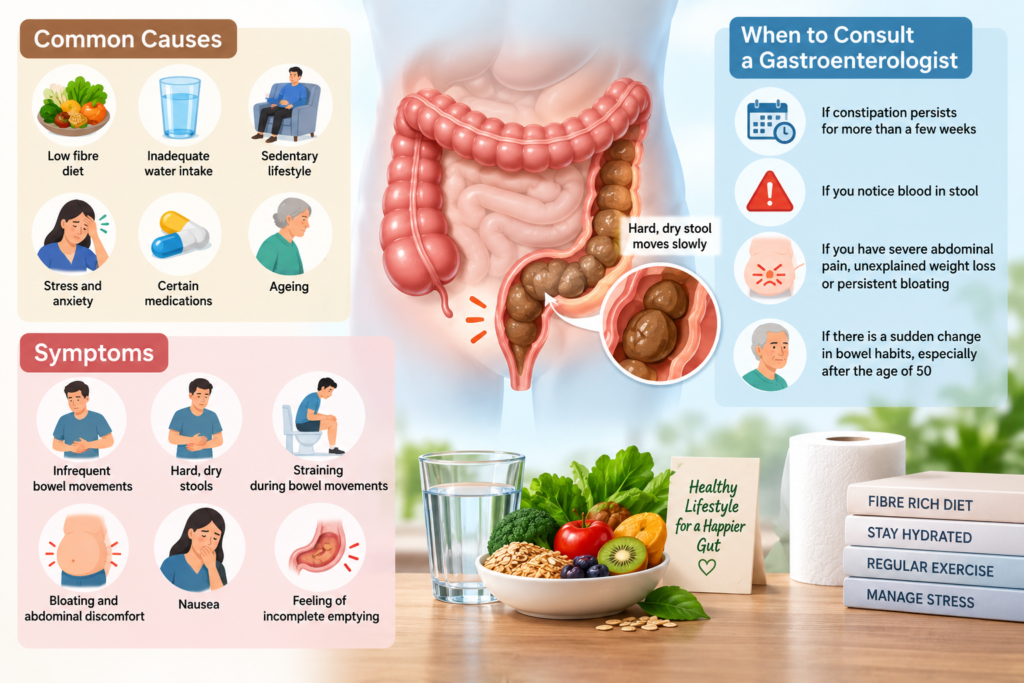
Low Fibre Intake
Dietary fibre helps support normal bowel function. Diets low in fibre may contribute to constipation in some people.
Inadequate Fluid Intake
Insufficient fluid intake can contribute to hard stools, particularly in susceptible individuals.
Lack of Physical Activity
A sedentary lifestyle can be associated with slower bowel function.
Ignoring the Urge to Pass Stool
Regularly delaying bowel movements may disrupt normal bowel habits.
Changes in Routine
Travel, changes in eating patterns, stress or changes in daily routine can temporarily affect bowel movements.
Medicines
Certain medications can cause constipation.
If constipation began after starting a new medicine, discuss it with your doctor rather than stopping prescribed treatment yourself.
Medical Conditions
Persistent constipation may sometimes be associated with metabolic, neurological or gastrointestinal conditions.
This is one reason chronic constipation should not always be treated simply by repeatedly taking laxatives without medical evaluation.
Common Symptoms
Constipation can cause:
- Hard stools
- Straining
- Abdominal discomfort
- Bloating
- Feeling of incomplete bowel emptying
- Reduced stool frequency
- Pain while passing stool
Repeated straining can also contribute to problems such as haemorrhoids in some patients.
How Can You Improve Constipation?
For uncomplicated constipation, lifestyle changes may help.
Increase Fibre Gradually
Fruits, vegetables, whole grains, pulses and other fibre-containing foods can support bowel health.
Increasing fibre too quickly may increase gas or bloating in some people, so gradual changes can be more comfortable.
Maintain Adequate Hydration
Drinking sufficient fluids is important for general health and may help maintain softer stools.
Stay Physically Active
Regular physical activity supports overall health and may help bowel function.
Develop a Regular Toilet Routine
Allow enough time to use the toilet and avoid repeatedly ignoring the urge to pass stool.
Should You Take Laxatives Every Day?
Laxatives can be useful and are medically appropriate for many patients, but the correct type and duration depend on the individual situation.
Repeatedly self-medicating without identifying the reason for chronic constipation is not ideal.
A gastroenterologist can determine whether lifestyle measures, medication or further investigation is appropriate.
When Should Constipation Be Investigated?
Seek medical evaluation if constipation is persistent, newly developed without an obvious reason or accompanied by concerning symptoms.
Warning signs may include:
- Blood in the stool
- Unexplained weight loss
- Persistent or severe abdominal pain
- Vomiting
- Significant abdominal swelling
- Anaemia
- Major or unexplained change in bowel habits
The need for tests depends on the patient’s age, medical history, symptoms and risk factors.
Can Constipation Be Related to IBS?
Yes.
Some people have irritable bowel syndrome with constipation (IBS-C), in which abdominal pain and changes in bowel habits occur together.
However, not every case of constipation is IBS. Proper evaluation is important before assigning a diagnosis.
When Should You Consult a Gastroenterologist?
Consultation may be appropriate when:
- Constipation continues despite lifestyle changes
- Symptoms frequently return
- You regularly need laxatives
- Bloating or abdominal pain is significant
- There is bleeding
- Bowel habits have changed unexpectedly
- Constipation significantly affects quality of life
Consult a Gastroenterologist in Lucknow
Chronic constipation can have many causes, and effective treatment begins by understanding why it is happening.
People searching for the best Gastroenterologist in Lucknow for constipation should look for specialist evaluation rather than relying only on temporary home remedies.
Dr. Puneet Mehrotra, Gastroenterologist, Hepatologist and Therapeutic Endoscopist, provides consultation for constipation and other gastrointestinal conditions in Lucknow.
Frequently Asked Questions
Is it necessary to pass stool every day?
No. Normal bowel frequency varies between individuals. Constipation is assessed using stool consistency, difficulty passing stool, frequency and other symptoms.
Can constipation cause bloating?
Yes. Constipation commonly contributes to abdominal fullness and bloating.
Does drinking water cure constipation?
Adequate hydration is important, but chronic constipation may have multiple causes. Water alone may not resolve every case.
When is constipation serious?
Constipation accompanied by bleeding, unexplained weight loss, severe pain, vomiting or a major new change in bowel habits requires medical evaluation.
Which doctor should I consult for chronic constipation?
A gastroenterologist specialises in digestive disorders and can evaluate persistent or recurrent constipation.