GERD vs Acidity: What’s the Difference?
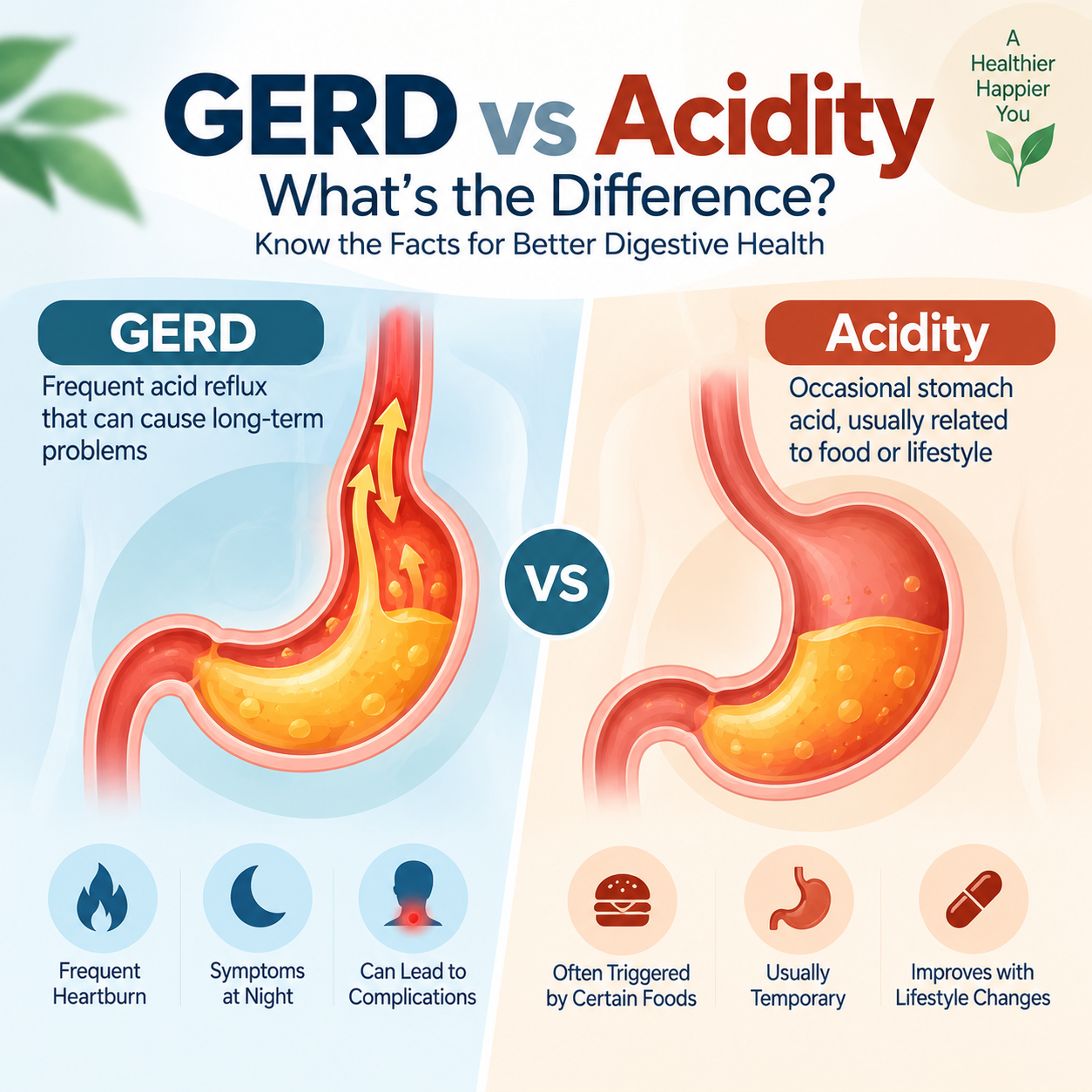
“Acidity” is a term commonly used for burning in the chest or upper abdomen, sour burps and digestive discomfort. GERD, on the other hand, is a recognised medical condition involving repeated reflux of stomach contents into the oesophagus that causes troublesome symptoms or complications.
Understanding the difference is important because frequent symptoms should not always be managed as occasional acidity.
If you experience recurring heartburn or reflux, consultation with an experienced Gastroenterologist in Lucknow can help determine whether the problem is occasional reflux, GERD or another digestive condition.
What Do People Mean by Acidity?
“Acidity” is not one specific diagnosis.
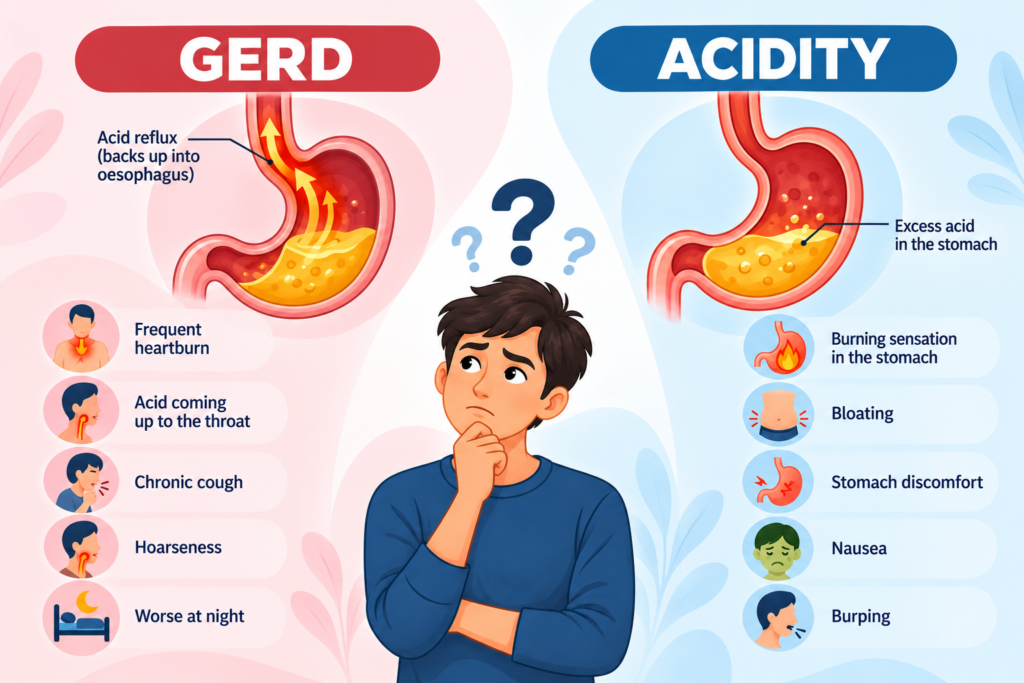
People commonly use the term to describe symptoms such as:
- Heartburn
- Sour taste
- Acid regurgitation
- Upper abdominal burning
- Burping
- Indigestion
These symptoms may occur after a large meal or in association with particular foods and lifestyle factors.
Occasional episodes do not necessarily mean that a person has GERD.
What Is Acid Reflux?
Acid reflux occurs when stomach contents travel backward into the oesophagus.
The lower oesophageal sphincter normally helps prevent this backward movement. When reflux occurs, stomach acid and other contents can irritate the oesophagus.
This can produce heartburn and regurgitation.
What Is GERD?
GERD stands for Gastroesophageal Reflux Disease.
It refers to reflux that causes repeated troublesome symptoms and/or complications.
A person with occasional heartburn after a particularly heavy meal may not have GERD. Someone experiencing frequent reflux that affects sleep or quality of life may require assessment for GERD.
GERD vs Occasional Acidity
The main difference is not simply the intensity of one episode.
Occasional reflux may happen infrequently and resolve with lifestyle changes.
GERD tends to involve persistent or recurrent symptoms that may interfere with everyday life and sometimes require medical treatment.
A gastroenterologist evaluates the overall pattern rather than diagnosing GERD from a single episode of heartburn.
Common Symptoms of GERD
Typical symptoms include:
- Frequent heartburn
- Acid regurgitation
- Sour or bitter taste
- Symptoms after meals
- Symptoms when lying down
- Nighttime reflux
Some patients may experience other symptoms such as throat irritation, hoarseness or chronic cough.
Because these symptoms can have other causes, medical evaluation may sometimes be required.
What Can Trigger Reflux?
Potential triggers or contributing factors include:
Large Meals
A very full stomach may make reflux more likely.
Lying Down After Eating
Going to bed shortly after eating can worsen nighttime symptoms in some patients.
Excess Body Weight
Increased abdominal pressure associated with excess body weight may contribute to reflux.
Smoking
Smoking can worsen reflux and has many other harmful health effects.
Certain Foods and Drinks
Trigger foods vary between individuals. Fatty meals, caffeine, chocolate, spicy foods and certain acidic foods or beverages may worsen symptoms in some people.
The goal should be to identify individual triggers rather than unnecessarily restricting every commonly blamed food.
Can GERD Become Serious?
Persistent reflux can cause inflammation of the oesophagus in some patients.
Longstanding GERD may also be associated with other oesophageal complications in a subset of patients.
This does not mean everyone with occasional acidity will develop complications. However, persistent symptoms should not be ignored.
How Is GERD Diagnosed?
Many cases can initially be assessed using symptoms and medical history.
A gastroenterologist will consider:
- Frequency of symptoms
- Duration
- Relationship with meals
- Nighttime reflux
- Response to previous treatment
- Difficulty swallowing
- Weight loss
- Bleeding or anaemia
Further investigation may be recommended depending on the patient’s symptoms and risk factors.
Is Endoscopy Necessary for GERD?
Not every patient with reflux requires an endoscopy.
Upper GI endoscopy may be recommended in selected situations, particularly when warning signs are present, symptoms persist despite appropriate treatment or the doctor needs to assess the oesophagus and stomach directly.
The decision should be individualised.
Treatment of GERD
Treatment may involve lifestyle measures and medicines.
Lifestyle Measures
Helpful changes may include:
- Avoiding very large meals
- Avoiding lying down soon after eating
- Maintaining a healthy body weight
- Identifying personal food triggers
- Avoiding smoking
- Adjusting dinner and bedtime timing
Patients with nighttime symptoms may receive additional personalised advice from their doctor.
Medicines
Acid-suppressing medicines are commonly used to manage GERD when medically appropriate.
The medicine, dose and duration depend on the patient’s condition.
Long-term treatment should be guided by a healthcare professional rather than repeatedly starting or stopping medication without advice.
When Should You Consult a Gastroenterologist?
Medical evaluation is particularly important if you have:
- Frequent or persistent heartburn
- Reflux that disturbs sleep
- Difficulty swallowing
- Pain while swallowing
- Persistent vomiting
- Unexplained weight loss
- Gastrointestinal bleeding
- Symptoms that continue despite appropriate treatment
Chest pain should not automatically be assumed to be acidity. Severe or new chest pain, particularly with breathlessness, sweating, dizziness or pain spreading to the arm or jaw, requires prompt medical assessment.
Consult a Gastroenterologist in Lucknow for GERD
Occasional acidity and GERD are not necessarily the same.
If heartburn and reflux keep returning, proper evaluation can help identify the cause and determine whether lifestyle measures, medication or further investigation is appropriate.
Patients looking for the best Gastroenterologist in Lucknow for GERD can consider a specialist’s experience in gastroenterology and therapeutic endoscopy.
Dr. Puneet Mehrotra, Gastroenterologist, Hepatologist and Therapeutic Endoscopist, provides consultation for GERD, acidity, acid reflux and other gastrointestinal conditions in Lucknow.
Frequently Asked Questions
Is GERD the same as acidity?
No. “Acidity” is commonly used to describe several digestive symptoms. GERD is a medical condition involving troublesome recurrent reflux and/or reflux-related complications.
Can GERD be controlled?
GERD can often be effectively managed using appropriate lifestyle measures and medical treatment. Management depends on the individual patient.
Does everyone with GERD need an endoscopy?
No. Endoscopy is recommended selectively based on symptoms, warning signs, treatment response and clinical assessment.
Can GERD cause nighttime symptoms?
Yes. Reflux can worsen when lying down and may disturb sleep in some patients.
Which doctor should I consult for GERD?
A gastroenterologist specialises in digestive disorders, including GERD and other conditions affecting the oesophagus and stomach.