Gas and Bloating: Common Causes and When You Should Be Concerned
Feeling gassy or bloated occasionally is common, especially after eating certain foods or a large meal. But when bloating happens frequently, becomes painful or is accompanied by changes in bowel habits, it may indicate an underlying digestive problem that needs evaluation.
Bloating is often described as a sensation of abdominal fullness, tightness or pressure. Some people also notice visible abdominal distension.
If frequent gas and bloating are affecting your daily life, consulting an experienced Gastroenterologist in Lucknow can help determine why the symptoms are occurring.
What Is Intestinal Gas?
Gas is a normal part of digestion.
It can enter the digestive tract when we swallow air while eating or drinking. Gas can also be produced when bacteria in the large intestine break down certain carbohydrates that are not completely digested earlier in the digestive tract.
Gas may leave the body through burping or passing wind.
Having some intestinal gas is therefore normal and does not automatically indicate disease.
What Is Bloating?
Bloating is the feeling that your abdomen is unusually full, tight or swollen.
Interestingly, feeling bloated does not always mean that excessive gas is physically present. Bloating can also be related to how the digestive tract moves, bowel sensitivity, constipation and several gastrointestinal conditions.
Some patients experience bloating without obvious abdominal enlargement, while others develop visible distension.
Common Causes of Gas and Bloating
There are many possible reasons for these symptoms.
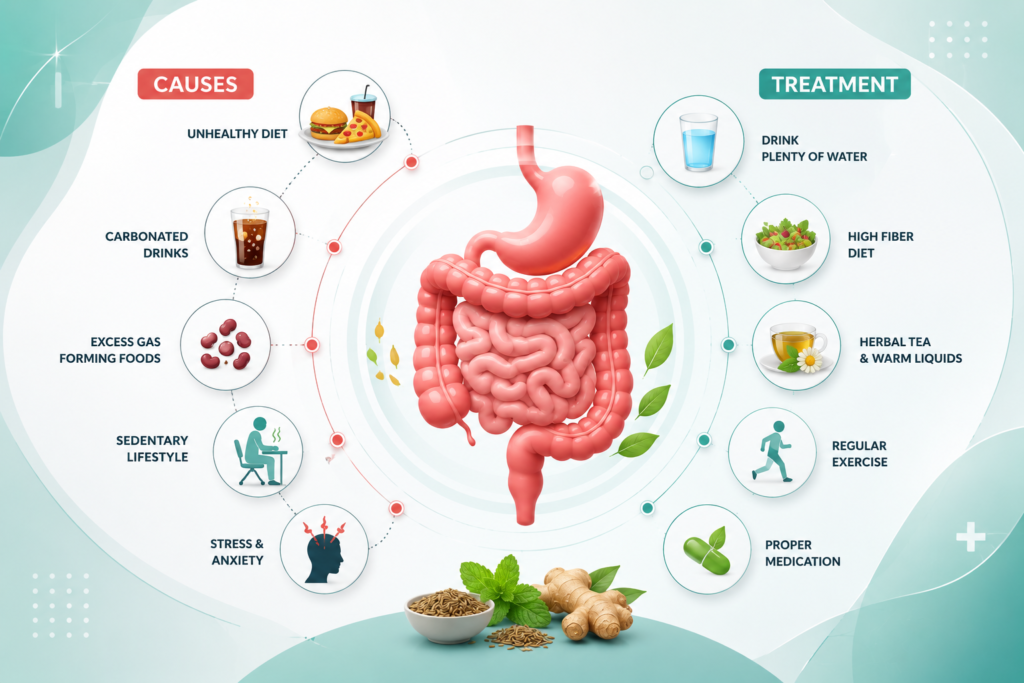
1. Eating Too Quickly
Eating quickly can cause you to swallow more air.
Eating slowly and chewing food properly may help reduce swallowed air and improve eating habits.
2. Carbonated Drinks
Soft drinks and other carbonated beverages contain gas, which can contribute to belching and feelings of abdominal fullness in some people.
3. Certain Foods
Some carbohydrates are not completely digested or absorbed in the small intestine.
When these reach the large intestine, gut bacteria ferment them and produce gas.
Foods that trigger symptoms vary considerably between individuals.
4. Constipation
Constipation is a common reason for abdominal fullness and bloating.
When bowel movements are infrequent or stools are difficult to pass, patients may experience abdominal discomfort, pressure and increased bloating.
Treating the underlying constipation may improve these symptoms.
5. Lactose Intolerance
People with lactose intolerance have difficulty digesting lactose, the natural sugar found in milk and dairy products.
Symptoms after consuming lactose-containing foods may include:
- Bloating
- Gas
- Abdominal discomfort
- Diarrhoea
The severity varies depending on the individual’s ability to digest lactose and the amount consumed.
6. Irritable Bowel Syndrome (IBS)
Bloating is a common complaint among people with irritable bowel syndrome.
IBS can cause abdominal pain associated with changes in bowel habits, including diarrhoea, constipation or both.
Symptoms can vary significantly between patients, so persistent symptoms should be assessed rather than self-diagnosed.
7. Food Intolerances
Certain foods or components of foods may cause digestive symptoms in susceptible individuals.
However, unnecessarily eliminating multiple food groups without professional advice can make the diet overly restrictive.
Keeping a symptom and food diary may sometimes help identify patterns that can then be discussed with a doctor or qualified dietitian.
8. Small Intestinal Bacterial Overgrowth
In selected patients, abnormal increases or changes in bacteria in the small intestine may contribute to bloating, abdominal discomfort and changes in bowel habits.
Diagnosis should be based on proper clinical assessment rather than symptoms alone.
9. Other Digestive Conditions
Persistent bloating can occasionally be associated with other gastrointestinal disorders.
This is particularly important when bloating appears suddenly, becomes progressively worse or occurs alongside other concerning symptoms.
Why Am I Bloated Even When I Eat Very Little?
Bloating is not always directly related to the quantity of food eaten.
Digestive motility, constipation, food intolerance, bowel sensitivity and functional gastrointestinal disorders can contribute to the sensation of fullness.
If you regularly feel bloated after small meals, especially if the problem is new or persistent, medical evaluation may be appropriate.
Gas vs Acidity: Are They the Same?
No.
People often use the words “gas” and “acidity” interchangeably, but they describe different digestive problems.
Gas generally refers to air or gases within the digestive tract.
Acid reflux occurs when stomach contents travel upward into the oesophagus, potentially causing heartburn and regurgitation.
Because some symptoms overlap, patients may incorrectly assume that every digestive complaint is caused by gas.
A gastroenterologist can help differentiate between these conditions.
How Can You Reduce Gas and Bloating?
Simple lifestyle changes may help when symptoms are mild and occasional.
Consider:
- Eating meals slowly
- Chewing food properly
- Avoiding overeating
- Reducing carbonated drinks if they trigger symptoms
- Staying physically active
- Maintaining adequate hydration
- Managing constipation
- Identifying foods consistently associated with symptoms
Avoid making highly restrictive dietary changes based solely on internet advice.
If a particular food seems to cause symptoms repeatedly, discuss it with a healthcare professional before eliminating an entire food group for a prolonged period.
When Should You Be Concerned About Bloating?
Occasional bloating is usually not alarming.
However, you should consider medical evaluation if bloating is persistent, progressively worsening or associated with symptoms such as:
- Significant or persistent abdominal pain
- Unexplained weight loss
- Blood in the stool
- Persistent vomiting
- Persistent diarrhoea
- Severe or prolonged constipation
- Difficulty eating
- Fever
- Significant changes in bowel habits
These symptoms do not necessarily mean that a serious condition is present, but they should not be ignored.
How Does a Gastroenterologist Diagnose Persistent Bloating?
Evaluation typically begins with your symptoms, medical history, dietary habits and bowel pattern.
Depending on the clinical situation, a gastroenterologist may recommend appropriate investigations.
Not every patient with gas or bloating needs extensive testing. The decision depends on age, symptoms, duration, medical history and whether warning signs are present.
Should You Take Medicine Every Time You Feel Gassy?
Occasional symptoms may improve with simple dietary or lifestyle changes.
However, repeatedly taking medicines for gas without understanding why the problem keeps occurring may mask an underlying digestive condition.
If symptoms continue for several weeks or repeatedly return, medical evaluation is more useful than continually changing medicines on your own.
Consult a Gastroenterologist for Persistent Gas and Bloating
Gas and bloating are common digestive complaints, but persistent symptoms should not simply be accepted as normal.
Identifying whether symptoms are related to diet, constipation, IBS, food intolerance or another gastrointestinal problem can help guide appropriate management.
Patients searching for the best Gastroenterologist in Lucknow can consider specialist qualifications, experience in gastrointestinal disorders, diagnostic capabilities and expertise in gastrointestinal procedures when choosing a doctor.
Dr. Puneet Mehrotra, Gastroenterologist, Hepatologist and Therapeutic Endoscopist at Lucknow Gastroenterology & Gynaecology Centre, provides consultation for gas, bloating, constipation, IBS and a wide range of gastrointestinal and liver-related conditions.
If bloating is frequent, painful or associated with warning symptoms, consider scheduling a gastroenterology consultation rather than relying only on temporary remedies.
Frequently Asked Questions
Is daily bloating normal?
Occasional bloating is common, but persistent or progressively worsening bloating should be evaluated, particularly when accompanied by pain, weight loss, bleeding or bowel changes.
Can constipation cause gas and bloating?
Yes. Constipation can contribute to abdominal fullness, discomfort and bloating.
Why do I get bloated immediately after eating?
Eating quickly, swallowing air, certain foods, digestive sensitivity and several gastrointestinal conditions may contribute. Persistent symptoms require individual assessment.
Can IBS cause excessive bloating?
Bloating is commonly reported by people with IBS, often together with abdominal pain and altered bowel habits.
Which doctor should I consult for persistent gas and bloating?
A gastroenterologist specialises in gastrointestinal disorders and can evaluate persistent gas, bloating and associated digestive symptoms.