Persistent Indigestion: Causes, Symptoms & Treatment – When Should You See a Gastroenterologist?
Indigestion is a common digestive complaint that most people experience occasionally. You may feel unusually full after eating, experience burning or discomfort in the upper abdomen, or develop frequent burping and bloating. An occasional episode after a heavy meal may not be concerning, but persistent or recurring indigestion should not simply be ignored.
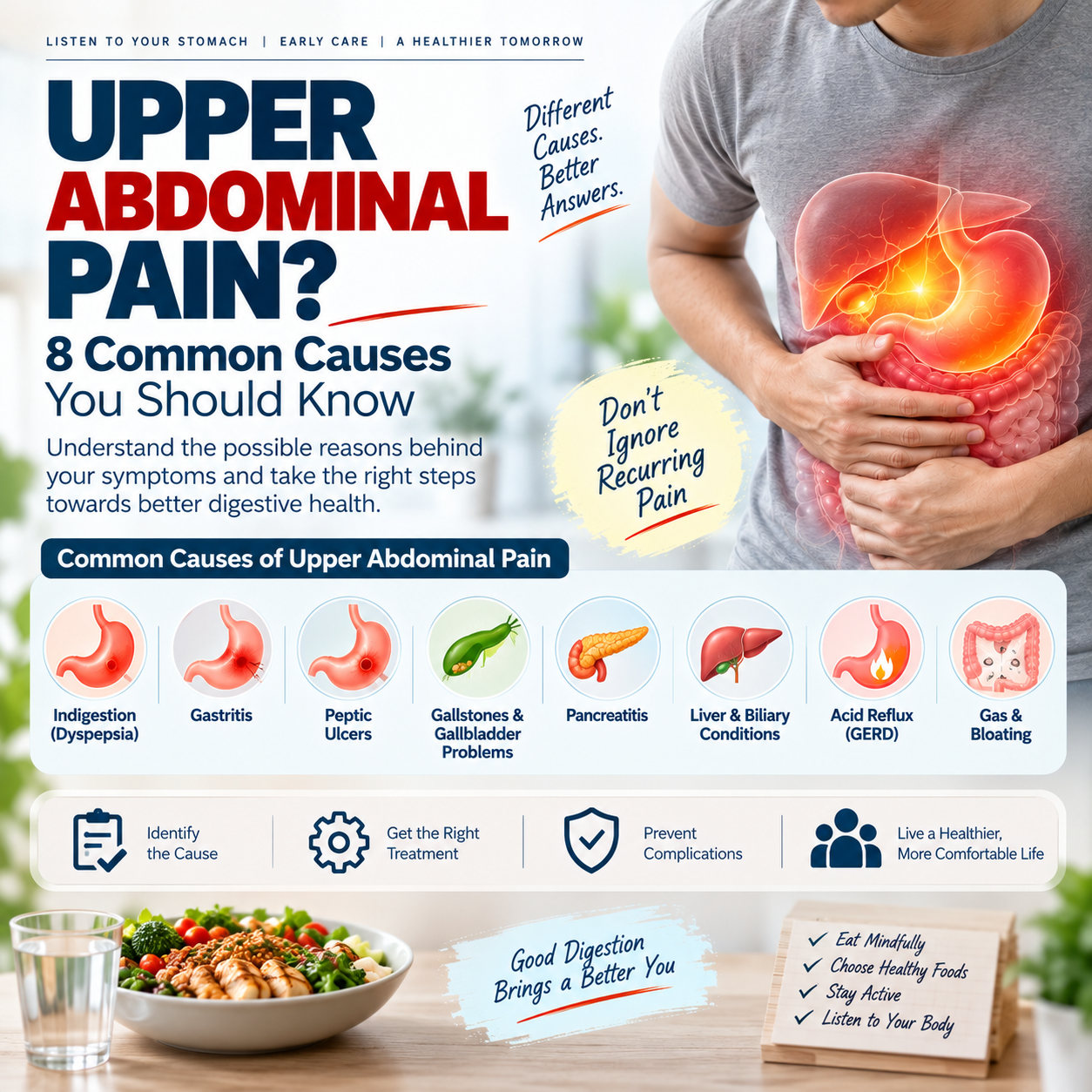
Persistent indigestion, medically known as dyspepsia, can sometimes be related to eating habits or lifestyle factors. However, it may also occur due to conditions such as acid reflux, gastritis, peptic ulcers or other gastrointestinal disorders.
Understanding the underlying cause is important, particularly when symptoms continue despite dietary and lifestyle changes.
What Is Indigestion?
Indigestion is not a single disease. It describes a group of symptoms involving discomfort in the upper digestive system.
Common symptoms include:
- Upper abdominal discomfort or pain
- Feeling full quickly while eating
- Uncomfortable fullness after meals
- Burning sensation in the upper abdomen
- Bloating
- Frequent burping
- Nausea
- Acidic or sour sensation in the mouth in some patients
Some people experience indigestion occasionally, while others develop symptoms repeatedly over weeks or months.
When symptoms become frequent or persistent, medical evaluation may be needed.
What Causes Persistent Indigestion?
There are several possible reasons why indigestion may continue or repeatedly return.
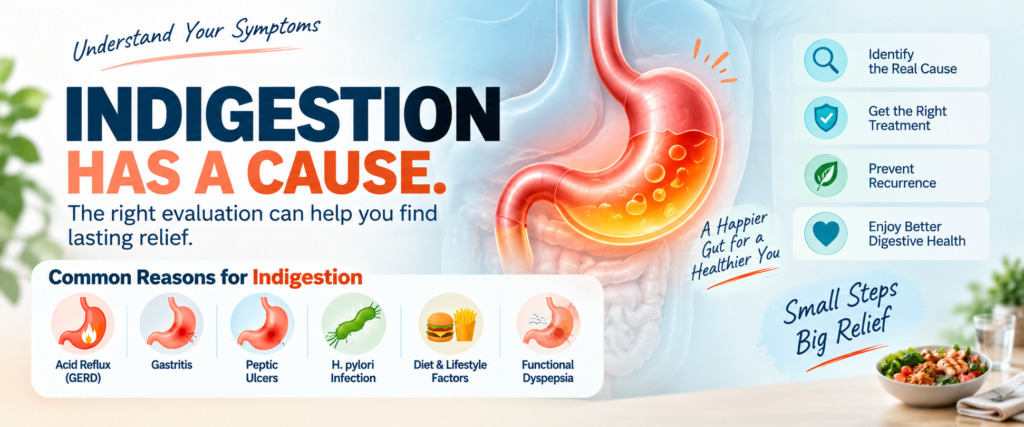
1. Gastroesophageal Reflux Disease (GERD)
GERD occurs when stomach contents repeatedly flow backwards into the oesophagus.
It may cause:
- Heartburn
- Acid regurgitation
- Sour taste
- Chest or upper abdominal discomfort
- Symptoms that worsen after meals or while lying down
GERD and indigestion can sometimes occur together, although they are not exactly the same condition.
2. Gastritis
Gastritis refers to inflammation of the stomach lining.
Possible symptoms include:
- Upper abdominal burning
- Nausea
- Indigestion
- Loss of appetite
- Feeling unusually full after meals
Gastritis can have several causes, including certain medicines, infection with Helicobacter pylori (H. pylori), and other factors.
3. Peptic Ulcers
Peptic ulcers are sores that develop in the lining of the stomach or the first part of the small intestine.
Symptoms may include:
- Burning or aching upper abdominal pain
- Indigestion
- Nausea
- Bloating
- Discomfort associated with meals
Some ulcers can also bleed, potentially causing black, tarry stools or vomiting of blood. Such symptoms require urgent medical attention.
4. H. pylori Infection
Helicobacter pylori is a bacterium that can infect the stomach.
It is associated with conditions such as chronic gastritis and peptic ulcer disease.
Testing for H. pylori may be considered in selected patients depending on their symptoms and clinical assessment.
5. Functional Dyspepsia
Sometimes patients experience persistent indigestion even when routine evaluation does not identify an obvious structural abnormality.
This condition is known as functional dyspepsia.
Symptoms can include:
- Early fullness
- Fullness after meals
- Upper abdominal discomfort
- Burning
- Bloating
Management depends on the patient’s symptoms and individual clinical findings.
6. Eating Habits
Indigestion may be triggered or worsened by certain eating patterns, including:
- Eating very quickly
- Consuming unusually large meals
- Frequently eating heavy or fatty foods
- Excessive spicy foods in susceptible individuals
- Lying down soon after eating
Identifying personal food triggers can sometimes help reduce symptoms.
7. Alcohol, Smoking and Excessive Caffeine
Alcohol, tobacco and excessive consumption of caffeinated beverages can aggravate digestive symptoms in some individuals.
Lifestyle modification may therefore form part of the overall management plan.
8. Certain Medicines
Some medicines can irritate the gastrointestinal tract or contribute to indigestion.
For example, certain painkillers may affect the stomach lining when used frequently.
Patients should not stop prescribed medicines without consulting their doctor. Instead, persistent digestive symptoms should be discussed with the treating physician.
Indigestion vs Acidity: Are They the Same?
The terms “indigestion” and “acidity” are often used interchangeably, but they are not necessarily the same.
Indigestion usually refers to upper abdominal discomfort, fullness, bloating or burning associated with digestion.
Acid reflux occurs when stomach contents move upwards into the oesophagus and may cause heartburn or regurgitation.
A patient can experience one or both conditions.
When Should Persistent Indigestion Be Taken Seriously?
Medical evaluation becomes particularly important when indigestion is persistent, recurrent, worsening or accompanied by other symptoms.
Consult a gastroenterologist if you experience:
- Indigestion that keeps returning
- Persistent upper abdominal pain
- Difficulty or pain while swallowing
- Repeated vomiting
- Unexplained weight loss
- Loss of appetite
- Black or tarry stools
- Blood in vomit
- Persistent weakness or fatigue
- Symptoms of anaemia
- Significant changes in digestive symptoms
These symptoms do not automatically indicate a serious disease, but they may require further investigation.
How Is Persistent Indigestion Diagnosed?
Diagnosis begins with understanding the pattern and duration of symptoms.
A gastroenterologist may ask about:
- When symptoms started
- Relationship between symptoms and meals
- Dietary habits
- Acid reflux symptoms
- Current medications
- Smoking or alcohol use
- Previous gastrointestinal problems
- Weight changes
- Family medical history
Further investigations depend on the patient’s symptoms and risk factors.
Tests That May Be Recommended
Blood Tests
Blood investigations may help identify anaemia, infection or other abnormalities depending on the clinical situation.
H. pylori Testing
Testing for H. pylori may be recommended when infection is suspected.
Different testing methods are available, and the appropriate test depends on the individual patient.
Upper GI Endoscopy
Upper gastrointestinal endoscopy allows a gastroenterologist to directly examine the oesophagus, stomach and duodenum using a thin flexible instrument with a camera.
It may help identify conditions such as:
- Gastritis
- Peptic ulcers
- Oesophageal inflammation
- Certain structural abnormalities
- Other causes of persistent upper gastrointestinal symptoms
Not every patient with indigestion requires an endoscopy. The decision depends on age, symptoms, warning signs, medical history and clinical evaluation.
How Is Persistent Indigestion Treated?
Treatment depends on the underlying cause rather than simply suppressing symptoms.
Management may involve:
- Dietary modifications
- Changes in meal timing
- Treatment for acid-related conditions
- H. pylori treatment when appropriately diagnosed
- Treatment of gastritis or ulcers
- Reviewing medicines that may aggravate symptoms
- Management of functional dyspepsia
- Lifestyle changes
Patients should avoid repeatedly taking over-the-counter acidity medicines for persistent symptoms without identifying why those symptoms are occurring.
Lifestyle Tips That May Help
Some simple habits may reduce indigestion in many patients:
- Eat smaller and balanced meals
- Eat slowly and chew food properly
- Avoid lying down immediately after meals
- Identify foods that repeatedly trigger symptoms
- Avoid excessive alcohol
- Stop smoking
- Limit excessive caffeine if it worsens symptoms
- Maintain regular physical activity
- Maintain a healthy body weight
- Avoid unnecessary self-medication
The same diet does not work for everyone, so dietary restrictions should ideally be based on individual triggers rather than unnecessarily eliminating many foods.
Why Should You Not Ignore Recurrent Indigestion?
Repeatedly treating indigestion as “just gas” or “just acidity” can delay identification of its actual cause.
Most digestive symptoms have manageable causes, but persistent symptoms deserve proper evaluation.
A gastroenterologist can determine whether symptoms are likely to be functional, lifestyle-related or associated with an underlying gastrointestinal condition.
Consult a Gastroenterologist in Lucknow for Persistent Indigestion
If you experience frequent indigestion, acidity, upper abdominal discomfort, bloating, nausea or other persistent digestive symptoms, a gastroenterology consultation can help determine the underlying cause.
Dr. Puneet Mehrotra is a Gastroenterologist, Hepatologist, Therapeutic Endoscopist and GI & Liver Specialist in Lucknow.
Dr. Puneet Mehrotra
MD Medicine | DM Gastroenterology (SGPGIMS)
DNB – Gastroenterology
Member – American College of Gastroenterology
Gastroenterologist | Hepatologist | Therapeutic Endoscopist | GI & Liver Specialist
Lucknow Gastroenterology & Gynaecology Centre (LGGC)
B-127, Nirala Nagar, Behind Ram Krishna Math, Near IT College Crossing, Lucknow
Consultation Timing: 9:00 AM – 4:00 PM (Daily)
Contact:
9554554548
9415044452
0522-2787150
If you are looking for the best Gastroenterologist in Lucknow for persistent indigestion or other digestive concerns, timely evaluation can help establish the cause and guide appropriate treatment.
Frequently Asked Questions
What causes indigestion every day?
Frequent indigestion may be associated with eating habits, acid reflux, gastritis, functional dyspepsia, peptic ulcers or other digestive conditions. Persistent symptoms should be evaluated rather than self-diagnosed.
Is indigestion always caused by acidity?
No. Acid reflux is one possible cause, but indigestion can occur for several reasons.
Can stress cause indigestion?
Stress can influence gastrointestinal symptoms and may worsen symptoms in some people, particularly those with functional digestive disorders.
When is endoscopy needed for indigestion?
Not every patient needs endoscopy. A gastroenterologist may recommend it based on age, duration of symptoms, warning signs and other clinical factors.
Which doctor should I consult for persistent indigestion?
A gastroenterologist specialises in diagnosing and treating diseases affecting the digestive system and can evaluate recurrent or unexplained indigestion.