Upper Abdominal Pain: 8 Common Causes You Should Know
Upper abdominal pain is a common symptom that can arise from several organs in the digestive system. Sometimes the reason is relatively simple, such as indigestion or gas, while persistent or severe pain may be associated with conditions involving the stomach, gallbladder, pancreas, liver or other organs.
The location, intensity, duration and pattern of pain can provide useful clues, but symptoms alone are not always enough to determine the cause.
If upper abdominal pain is persistent, recurring, severe or associated with other concerning symptoms, proper medical evaluation is important.
Where Is Upper Abdominal Pain Felt?
The upper abdomen is generally the area between the lower chest and the belly button.
Pain may occur:
- In the upper middle abdomen
- Under the right ribs
- Under the left ribs
- Across the entire upper abdomen
- Around the upper abdomen and back
Different organs are located in or near these areas, which is why several conditions can produce similar symptoms.
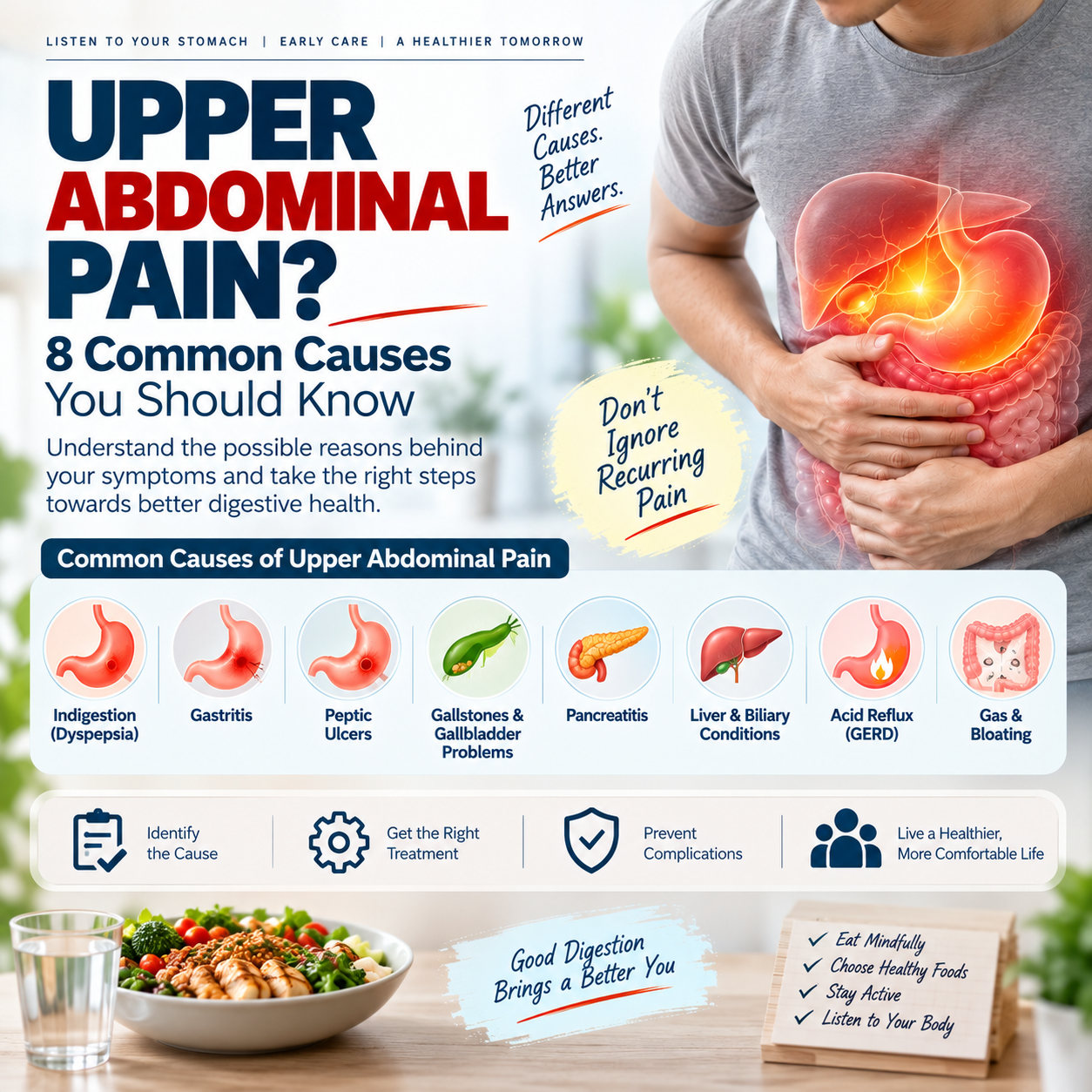
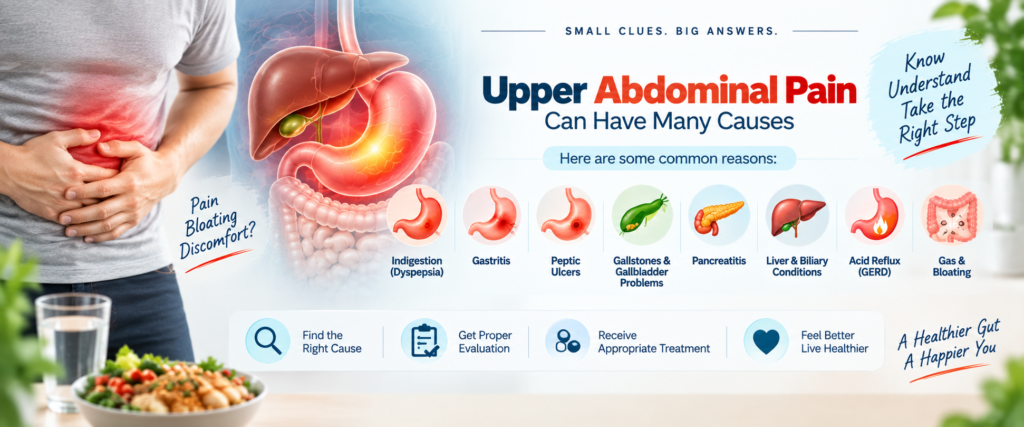
Here are 8 common possible causes of upper abdominal pain.
1. Indigestion (Dyspepsia)
Indigestion is one of the common causes of discomfort in the upper abdomen.
Symptoms may include:
- Upper abdominal discomfort
- Burning sensation
- Feeling full quickly
- Fullness after eating
- Bloating
- Burping
- Nausea
Occasional indigestion may be related to food or eating habits. Persistent or recurring symptoms, however, may require further evaluation.
2. Gastritis
Gastritis is inflammation of the stomach lining.
It may cause:
- Burning or aching in the upper abdomen
- Nausea
- Indigestion
- Reduced appetite
- Fullness after meals
Several factors can contribute to gastritis, including H. pylori infection and certain medicines.
Treatment depends on identifying the underlying cause.
3. Acid Reflux or GERD
Acid reflux occurs when stomach contents travel backwards into the oesophagus.
Patients may experience:
- Heartburn
- Burning behind the chest
- Upper abdominal discomfort
- Sour or acidic taste
- Regurgitation
- Symptoms after meals
- Symptoms that worsen when lying down
Frequent reflux symptoms may indicate gastroesophageal reflux disease (GERD) and should be appropriately evaluated.
4. Peptic Ulcer Disease
Peptic ulcers develop in the lining of the stomach or duodenum.
Pain is commonly experienced in the upper abdomen and may feel burning or aching.
Other symptoms can include:
- Indigestion
- Nausea
- Bloating
- Feeling full
- Reduced appetite
An ulcer can occasionally bleed. Black tarry stools, vomiting blood, dizziness or significant weakness require urgent medical attention.
5. Gallstones and Gallbladder Problems
Gallstones are hardened deposits that form inside the gallbladder.
When a gallstone blocks the normal flow of bile, it can cause pain, often in the right upper abdomen or upper middle abdomen.
The pain may sometimes occur after meals and may radiate towards the back or right shoulder.
Other symptoms can include:
- Nausea
- Vomiting
- Upper abdominal discomfort
Persistent severe pain, fever or jaundice requires prompt medical evaluation.
6. Pancreatitis
Pancreatitis means inflammation of the pancreas.
It can cause significant upper abdominal pain, which may extend into the back.
Other possible symptoms include:
- Nausea
- Vomiting
- Abdominal tenderness
- Fever in some cases
Acute pancreatitis can be a serious medical condition and generally requires prompt assessment.
Severe persistent upper abdominal pain, particularly with repeated vomiting, should not be managed only with home remedies.
7. Liver and Biliary Conditions
Some liver and bile-duct conditions can cause discomfort or pain in the right upper abdomen.
Depending on the underlying problem, other symptoms may include:
- Jaundice
- Dark urine
- Pale stools
- Nausea
- Loss of appetite
- Fever
Not all liver conditions cause pain, and the presence or absence of pain alone cannot determine liver health.
8. Gas and Bloating
Gas accumulation can produce pressure, bloating and discomfort throughout the abdomen, including the upper abdomen.
It may be associated with:
- Abdominal fullness
- Burping
- Passing gas
- Temporary cramping
- Symptoms related to certain foods
While occasional gas is common, recurrent upper abdominal pain should not automatically be attributed to gas.
Persistent symptoms may have another underlying cause.
Does the Location of Upper Abdominal Pain Matter?
Yes, location can sometimes provide useful clues.
Upper Right Abdominal Pain
Conditions involving the gallbladder, bile ducts or liver may cause symptoms in this area.
Upper Middle Abdominal Pain
The stomach, duodenum and pancreas are among the organs that may produce pain in the central upper abdomen.
Upper Left Abdominal Pain
Pain in this region may originate from several structures, including parts of the stomach, pancreas and bowel.
However, pain can radiate from one area to another. Therefore, location should not be used for self-diagnosis.
When Should You See a Gastroenterologist?
Consider medical evaluation if upper abdominal pain:
- Keeps returning
- Persists for several days
- Becomes progressively worse
- Regularly occurs after eating
- Is associated with repeated vomiting
- Is accompanied by unexplained weight loss
- Occurs with persistent loss of appetite
- Is associated with black stools
- Occurs along with jaundice
- Is accompanied by persistent changes in bowel habits
The cause can often be identified more accurately after proper clinical evaluation and appropriate investigations.
When Is Upper Abdominal Pain an Emergency?
Seek urgent medical attention for:
- Sudden severe abdominal pain
- Severe persistent pain
- Vomiting blood
- Black, tarry stools with weakness or dizziness
- Fainting or severe dizziness
- Persistent vomiting
- Severe pain accompanied by fever
- Abdominal pain accompanied by jaundice
- Chest pain or breathing difficulty
Chest and upper abdominal symptoms can sometimes overlap, so new or severe symptoms should not automatically be assumed to be digestive.
How Is Upper Abdominal Pain Diagnosed?
A gastroenterologist may first assess:
- Exact location of pain
- Duration
- Severity
- Relationship with meals
- Whether pain travels to the back or shoulder
- Associated vomiting or nausea
- Bowel symptoms
- Current medications
- Previous digestive conditions
- Medical and family history
Based on the clinical findings, investigations may be recommended.
Tests That May Be Required
Depending on the suspected condition, investigations may include:
Blood Tests
Blood tests can provide information about anaemia, inflammation and liver or pancreatic abnormalities depending on the clinical situation.
Abdominal Ultrasound
Ultrasound is commonly used to examine organs such as the liver and gallbladder and may help identify gallstones and certain other abnormalities.
Upper GI Endoscopy
Endoscopy allows examination of the oesophagus, stomach and duodenum.
It may be useful when gastritis, ulcers or other upper gastrointestinal conditions are suspected.
CT Scan or Other Imaging
In selected cases, more detailed imaging may be required to evaluate abdominal organs.
The appropriate investigation depends on the patient’s symptoms and examination findings.
How Is Upper Abdominal Pain Treated?
Treatment varies considerably because upper abdominal pain is a symptom rather than a disease.
Depending on the diagnosis, treatment may involve:
- Dietary and lifestyle modifications
- Medicines for acid-related disorders
- Treatment for H. pylori infection when appropriately diagnosed
- Management of gastritis or ulcers
- Treatment of gallbladder conditions
- Management of pancreatic or liver disease
- Endoscopic treatment in selected conditions
- Surgical referral when clinically required
Taking repeated painkillers or acidity medicines without identifying the underlying problem can sometimes delay diagnosis.
What Can You Do for Better Digestive Health?
General digestive-health habits include:
- Eat balanced meals
- Avoid routinely overeating
- Eat slowly
- Stay adequately hydrated
- Limit foods that consistently trigger your symptoms
- Avoid excessive alcohol
- Stop smoking
- Stay physically active
- Avoid unnecessary self-medication
- Seek medical advice for persistent symptoms
Most importantly, do not assume every upper abdominal symptom is simply “gas.”
Consult a Gastroenterologist in Lucknow
Persistent upper abdominal pain can have many possible causes, ranging from common digestive disorders to conditions that require specific treatment.
Dr. Puneet Mehrotra provides consultation for gastrointestinal, liver and related digestive conditions in Lucknow.
Dr. Puneet Mehrotra
MD Medicine | DM Gastroenterology (SGPGIMS)
DNB – Gastroenterology
Member – American College of Gastroenterology
Gastroenterologist | Hepatologist | Therapeutic Endoscopist | GI & Liver Specialist
Lucknow Gastroenterology & Gynaecology Centre (LGGC)
B-127, Nirala Nagar, Behind Ram Krishna Math, Near IT College Crossing, Lucknow
Consultation Timing: 9:00 AM – 4:00 PM (Daily)
Contact:
9554554548
9415044452
0522-2787150
If you are searching for the best Gastroenterologist in Lucknow for recurring upper abdominal pain or other digestive symptoms, appropriate evaluation can help identify the underlying cause and determine the right treatment approach.
Frequently Asked Questions
What is the most common reason for upper abdominal pain?
There is no single cause. Indigestion, gastritis, acid reflux and gas are common possibilities, while gallbladder, ulcer, pancreatic and other conditions can also cause upper abdominal pain.
Can gas cause upper abdominal pain?
Yes. Gas and bloating can cause upper abdominal pressure or discomfort, but persistent or severe pain should not automatically be considered gas.
Can gallstones cause upper abdominal pain?
Yes. Gallstones can cause pain in the right upper or central upper abdomen, particularly when they obstruct bile flow.
When should I worry about upper abdominal pain?
Seek medical advice for persistent, recurring or worsening pain. Severe pain associated with vomiting blood, black stools, fainting, jaundice, persistent vomiting, fever, chest pain or breathing difficulty requires prompt medical attention.
Is endoscopy required for upper abdominal pain?
Not always. Endoscopy may be recommended when a doctor suspects conditions involving the oesophagus, stomach or duodenum. The need for the procedure depends on symptoms and clinical findings.
Which doctor should I consult for recurring upper abdominal pain?
A gastroenterologist can evaluate digestive causes of persistent or recurrent upper abdominal pain and recommend appropriate tests and treatment.